en

Need Help Now? Call Us!
+86-159 9623 5291

Our team proudly offers an on-time guarantee and a 100% customer satisfaction guarantee.
Contact Online


 Home / News / Industry News / How Proportional Solenoid Valves Improve Lift Control in Large and Medium Tractors
 2026.10.19
 Industry News
Content
Large and medium tractors handle some of the most demanding jobs in agriculture, and the three-point hitch lift system is central to that work. Raising a plow, holding a seeder at a constant depth or lifting a sprayer clear at the headland all require the hydraulic system to meter oil smoothly and precisely. The component that controls this metering is the solenoid valve, and the difference between an on/off valve and a proportional solenoid valve shows up directly in the quality of the work produced. This article looks at how proportional solenoid valves improve lift control precision in large and medium tractors and what to consider when choosing one.
A three-point hitch does more than raise an implement at the end of a row. During tillage, the hitch must keep the implement working at a constant depth even as soil resistance changes across the field. During transport, it must hold the implement high without creeping down. During turns, the operator needs a fast but controlled lift that avoids bouncing the implement and overloading the tractor front axle.
Conventional solenoid directional valves operate in a binary way. The spool either moves fully open or returns to neutral, so the flow jumps between zero and maximum. That makes the lift start and stop abruptly, creates pressure spikes, causes overshoot and leads to constant hunting in the control loop. For a large or medium tractor pulling a heavy implement, these problems show up as uneven working depth, excessive wheel slip, higher fuel use and more fatigue for the operator.
 Proportional Solenoid Valve for Tractor Hydraulic Lift SystemsThis electrically controlled directional valve addresses the abrupt on/off behavior described for tractor lifts by enabling smooth, precise movement of implements. Its robust alloy steel body and standardized interfaces suit heavy agricultural tasks.View Product →
The key difference is in how the solenoid moves the spool. In a conventional on/off valve, the coil either pulls the spool all the way against its spring or releases it. In a proportional solenoid valve, the coil current is continuously adjustable, so the magnetic force on the spool varies proportionally. The spool can stop at any position between the two ends, and the metering edges create a variable opening that delivers any flow rate from zero to the rated maximum.
Most proportional valves are driven by a PWM signal. The controller modulates the duty cycle at a fixed frequency, and the average current sets the spool position. Because the spool and the hydraulic fluid act as a low-pass filter, movement remains smooth even though the electrical signal is pulsed. This simple and robust driving method suits agricultural machines that face dust, vibration and temperature extremes.
Closed-loop designs add a spool position sensor. The controller compares the actual position with the command and corrects the current continuously, compensating for changes in oil temperature, viscosity and load pressure. This brings a level of repeatability that open-loop valves cannot match. For more on the working principle, see how a solenoid directional valve controls hydraulic flow.
| Comparison Item | Conventional On/Off Valve | Proportional Solenoid Valve |
|---|---|---|
| Spool position | Fully open or closed | Stepless adjustment |
| Flow rise | Abrupt jump | Ramped and gradual |
| Depth holding | Frequent hunting | Stable, minor corrections |
| Operator workload | High | Low |
| Control interface | Switch or lever | Joystick with PWM |
A heavy implement should not be snapped out of the ground or slammed down at the row end. The proportional valve lets the controller ramp the flow over a defined period, so the lift arm accelerates and decelerates gently. This reduces shock loads on the implement frame, the hitch pins and the tractor rear axle.
When soil density varies, the draft force on an implement changes constantly. With a proportional valve in closed-loop mode, the controller watches the actual lift position and adjusts the opening in real time. Working depth stays within a small tolerance, which produces a very even seedbed and consistent tillage depth across the entire field.
In draft control, the system adjusts depth to keep a steady pull on the tractor. A proportional valve reacts to draft changes quickly and smoothly, eliminating the surging motion typical of on/off systems. In mixed control, it blends position and draft signals, which protects the engine from overload and keeps the implement at the selected depth.
For farm operators, the benefits of proportional lift control appear as measurable improvements in fuel use, work quality and machine life.
These advantages extend beyond the lift circuit. The same proportional valve technology can be used on a front loader, mid-mount implement or any hydraulic function that needs smooth metering. The operator gets high-quality control from a simple joystick, similar to what larger machines offer from a full electro-hydraulic system. For a closer look at the efficiency side, read our guide on how solenoid directional valves improve efficiency in hydraulic systems.
Choosing the right valve starts with the specifications of the tractor hydraulic system. The following points are the most important to check:
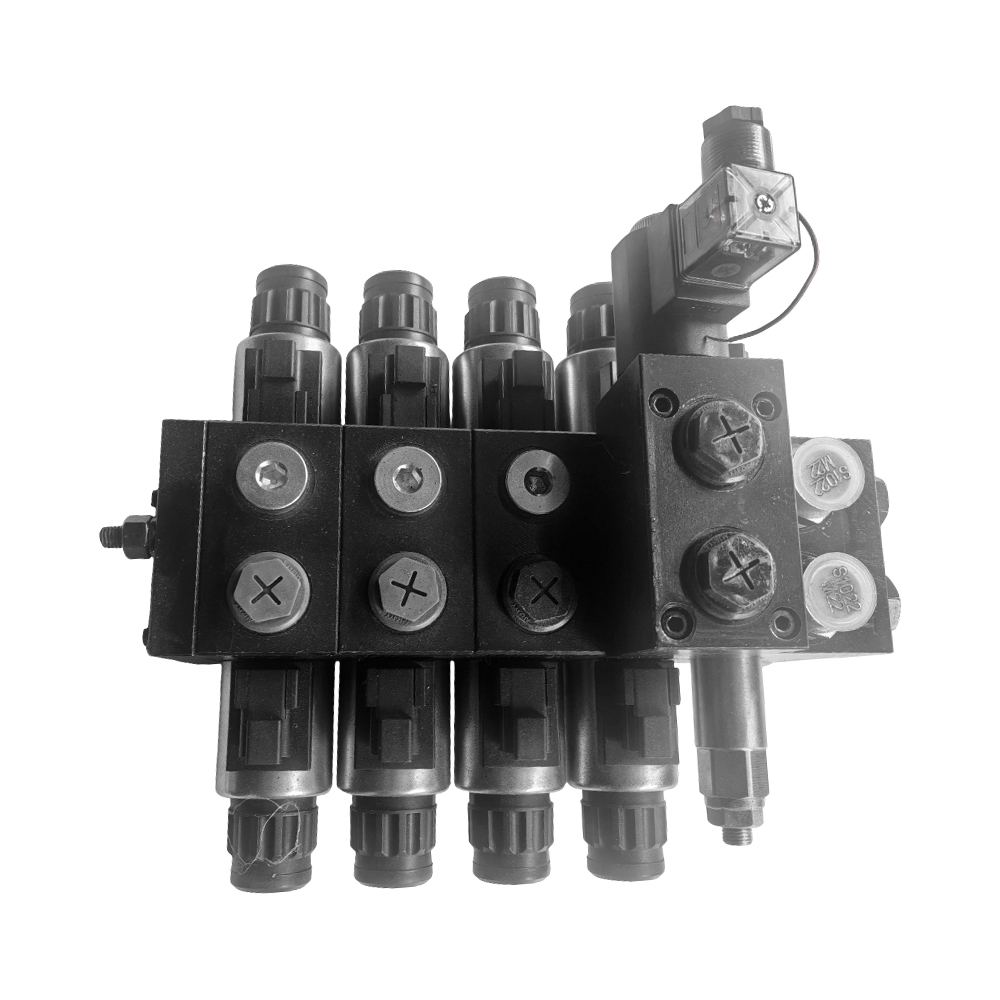
For tractors that also operate auxiliary hydraulic functions, a four-way proportional solenoid control valve makes a flexible choice. It provides the same stepless control in both directions and simplifies the plumbing for front-mounted equipment.
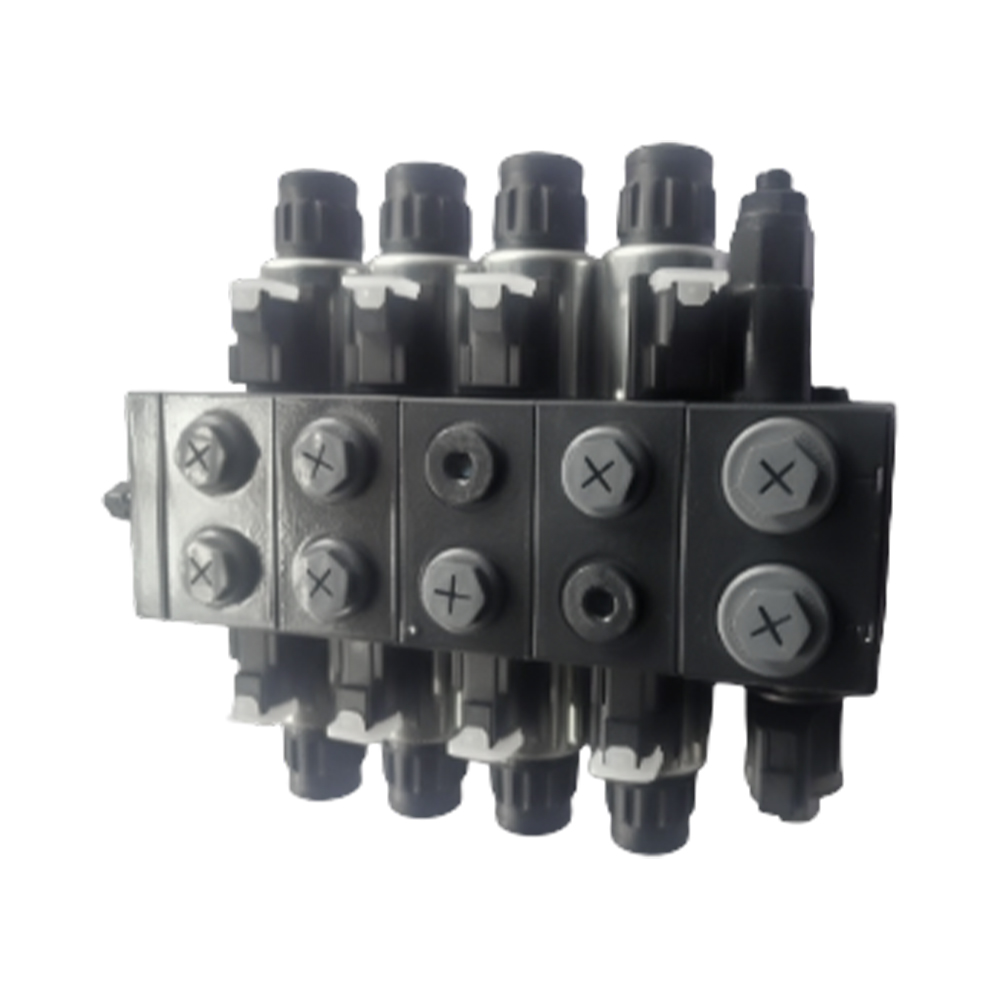 PDCF50 Four-Way Proportional Solenoid Control ValveFor tractors requiring auxiliary hydraulic functions, this modular multi-way valve offers stepless bidirectional flow control. Built with a cast body and direct-acting relief valve, it suits harsh conditions and simplifies plumbing for front-mounted equipment.View Product →
A regular solenoid directional valve works like a switch: the spool is either fully open or fully closed, so the flow jumps between zero and maximum. A proportional solenoid valve moves the spool to any intermediate position by adjusting the coil current, which allows the flow rate and the lift speed to be set precisely.
Yes, as long as the valve ratings match the tractor hydraulic system and the electrical connector is compatible. Older models without a joystick or controller may need a small PWM module and a lift position sensor. The payback is usually fast, because the tractor becomes easier to drive and more fuel-efficient.
Not necessarily. A proportional valve often keeps the spool in moderate positions instead of hammering it from stop to stop, which can reduce wear on the spool and housing. The main service items are the coil, connector seal and oil cleanliness, exactly as with any other valve in the tractor hydraulic system.
Precision in lift control is not a luxury for modern large and medium tractors; it is the basis for efficient, consistent field work. Proportional solenoid valves remove the abruptness of on/off switching, hold the implement steadily at the chosen depth and respond quickly to changing loads. The result is a tractor that works evenly, protects the implement and driver, and turns fuel into useful work more effectively.
When planning a new tractor specification or an upgrade to an existing hydraulic system, compare the valve ratings carefully and choose a supplier with real experience in agricultural hydraulics. A well-matched proportional solenoid valve is one of the most cost-effective improvements available for the lift system of a large or medium tractor.
Recommended Products

Contact Info.
+86-159 9623 5291
No. 5, Chuangye Road, Niandou Industrial Park, Ma'anshan City, Anhui Province, China
MOBILE QR CODE

 English
 Español