en

Need Help Now? Call Us!
+86-159 9623 5291

Our team proudly offers an on-time guarantee and a 100% customer satisfaction guarantee.
Contact Online


 Home / News / Industry News / How Do Solenoid Directional Valves Improve Efficiency in Hydraulic and Pneumatic Systems?
  2026.02.11
  Industry News
 Content
With the rapid development of modern industries, industrial automation has become a key to improving production efficiency and reducing human errors. Among the many automation control components, the solenoid directional valve plays an irreplaceable role in fluid control. It is widely used in hydraulic systems, pneumatic systems, and other fields, being an essential part of fluid power control. The solenoid directional valve can precisely control the direction, speed, and pressure of fluid flow, so it is indispensable in many complex industrial control systems.
This article will delve into the operating principles of the solenoid directional valve, its relationship with hydraulic control valves and pneumatic valve systems, as well as its widespread application in industrial automation. We will also analyze how the solenoid directional valve improves system control accuracy and efficiency by optimizing fluid flow control. Through a systematic discussion of these aspects, we will better understand the important role of the solenoid directional valve in modern industry.
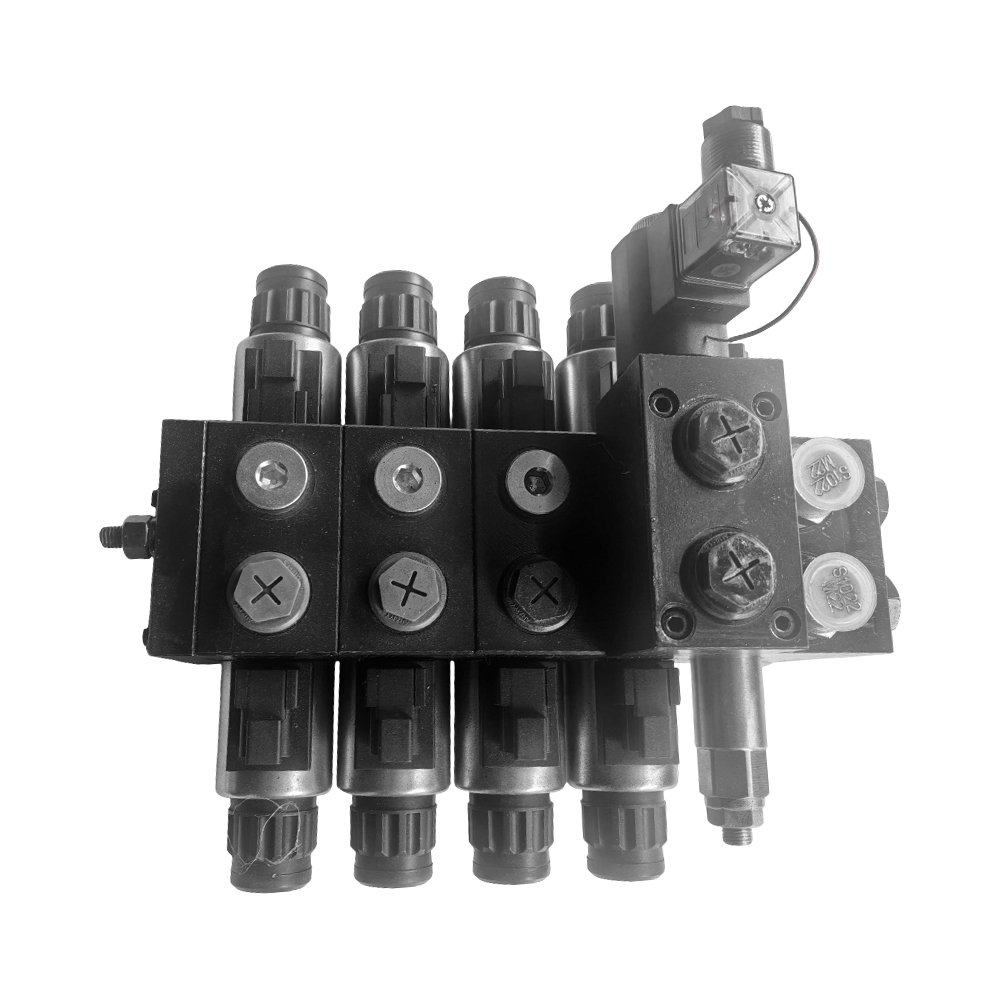
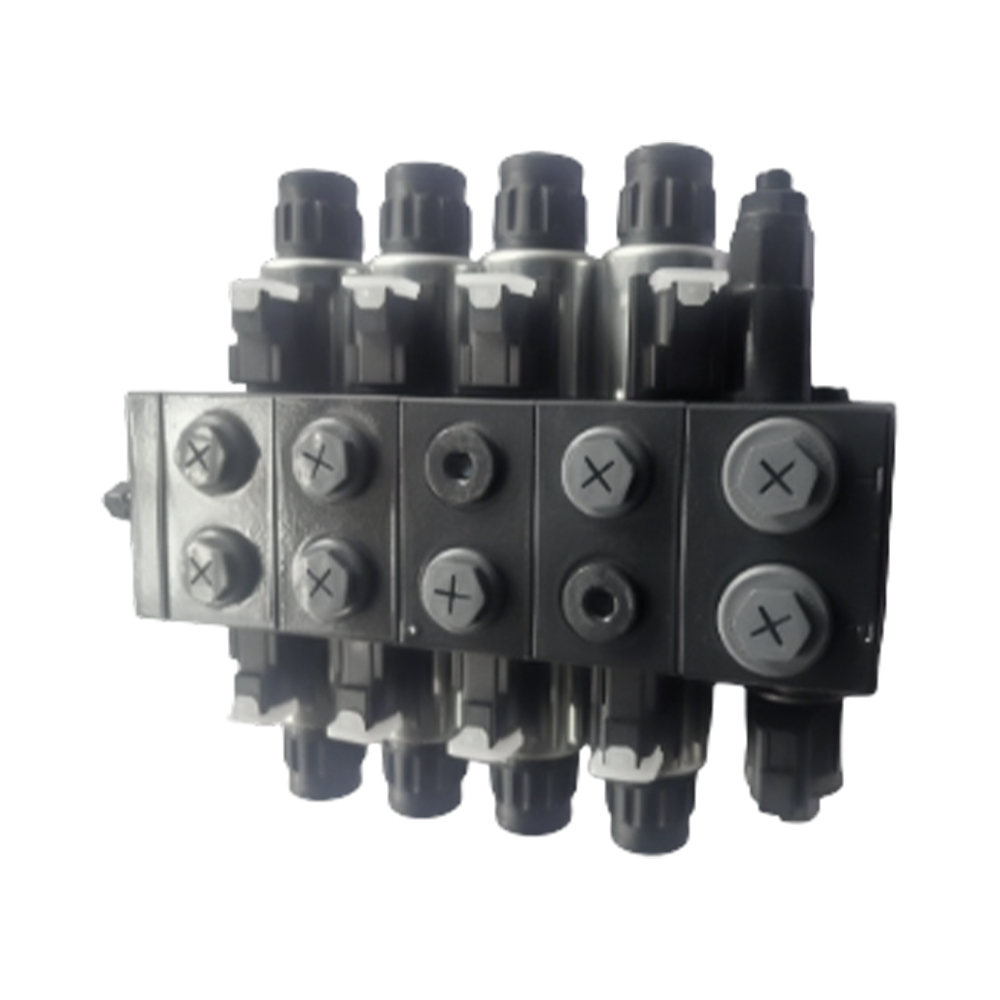
The solenoid directional valve is a type of valve driven by electromagnetic force, used to control the flow direction of liquids or gases in pipelines. Its main function is to adjust the direction of fluid flow, ensuring that hydraulic or pneumatic systems flow as required. Solenoid directional valves are usually classified into types such as one-way valves and changeover valves, depending on the internal structure and design of the valve body.
The basic structure of the solenoid directional valve consists of an electromagnet, valve core, valve seat, and spring. When the electromagnet is energized, it generates a magnetic field that attracts the valve core and changes the valve's switching state, thereby controlling the direction of fluid flow. Conversely, when the electromagnet is de-energized, the valve core returns to its original position under the action of the spring, stopping or changing the direction of fluid flow.
The operating principle of a solenoid directional valve can be summarized in several steps:
The solenoid directional valve has a wide range of applications, particularly in hydraulic and pneumatic systems. Its main applications include:
The hydraulic system is an indispensable power source in modern mechanical engineering, relying on fluid pressure to transmit power. Hydraulic control valves are an important part of hydraulic systems, responsible for controlling the direction, pressure, and flow of hydraulic oil. The solenoid directional valve, as a special form of hydraulic control valve, uses electromagnetic force to control the direction and pressure of hydraulic oil, and thus, it is closely related to hydraulic control valves.
In a hydraulic system, the solenoid directional valve usually works together with hydraulic pumps, hydraulic cylinders, hydraulic motors, and other components. When the solenoid directional valve receives control signals, it regulates the flow of hydraulic oil, adjusting the operation of hydraulic cylinders or hydraulic motors. For example, in a hydraulic press, the solenoid directional valve changes the oil flow direction, making the hydraulic cylinder move back and forth in a predetermined manner to complete material stamping operations.
Hydraulic control valves play a vital role in industrial hydraulic systems. They not only regulate the flow of hydraulic oil but also control the pressure and flow to adjust the output power and working efficiency of the hydraulic system. In hydraulic systems, the roles of hydraulic control valves include:
The main advantage of solenoid directional valves in hydraulic systems is their precise control and high-speed response. Compared with traditional mechanical valves, solenoid directional valves can quickly and accurately switch states due to the electromagnetic drive method. This fast response characteristic allows hydraulic systems to operate efficiently in applications requiring precise regulation.
In hydraulic systems, solenoid directional valves not only improve work efficiency but also reduce energy consumption and extend the equipment's service life. By precisely controlling the fluid, solenoid directional valves ensure that the oil is directed to the correct flow direction and pressure, avoiding unnecessary energy waste and mechanical wear.
Pneumatic systems, which use compressed air as the power source, are widely used in automated production lines, robotic control, spraying, and other fields. Unlike hydraulic systems, pneumatic systems use air as the working medium, so the control requirements for pneumatic valve systems differ. The solenoid directional valve plays a crucial role in pneumatic systems by adjusting the flow and speed of air to control pneumatic actuators.
The solenoid directional valve in pneumatic systems works similarly to its role in hydraulic systems. It changes the airflow direction, regulating the movement of pneumatic actuators (such as pneumatic cylinders and pneumatic motors), thus completing specific industrial tasks. For example, in an automated assembly line, the solenoid directional valve controls the movement of pneumatic cylinders, enabling robotic arms to perform assembly tasks.
While the solenoid directional valve plays an important role in both hydraulic and pneumatic systems, its operating principles differ. In hydraulic systems, due to the incompressibility of liquids, solenoid directional valves must withstand higher pressures and loads. In contrast, the air’s compressibility in pneumatic systems results in lower operating pressures for solenoid directional valves.
An advantage of solenoid directional valves in pneumatic systems is their relatively simple structure and lower cost. Since pneumatic systems operate at lower pressures, pneumatic valves typically have a simpler design and are more economical than hydraulic valves.
In pneumatic systems, the solenoid directional valve contributes not only by precisely controlling the airflow direction and speed but also by controlling the movement speed, force, and accuracy of actuators. The precise control provided by solenoid directional valves enables pneumatic systems to respond quickly and with high accuracy, meeting the high demands for efficiency and precision in modern automated production.
The precise control principles of solenoid directional valves mainly rely on the interaction between the electromagnet and the valve core. The electromagnet is the core component of the solenoid directional valve. When current flows through the electromagnetic coil, it generates a magnetic field that exerts force on the valve core, causing it to move and change the valve's switching state. When the electromagnet is de-energized, the valve core returns to its original position under the action of the spring, stopping or changing the direction of fluid flow.
The flow control capability of a solenoid directional valve directly affects the overall system's work efficiency. In hydraulic or pneumatic systems, solenoid directional valves regulate the flow rate and pressure of the fluid to control actuator motion, thus meeting various process requirements. However, the response speed of the valve significantly impacts the precision of flow control. The faster the response, the quicker the valve can adjust the fluid flow, improving the system's response ability and control precision.
The control accuracy of solenoid directional valves plays a decisive role in the performance of the entire industrial automation system. Accurate control ensures that the fluid flows in the system according to the preset path, avoiding unnecessary errors and waste. High-precision solenoid directional valves can precisely adjust the fluid flow rate and pressure, ensuring the stability and long-term reliable operation of equipment.
Solenoid directional valves are widely applied in modern industrial automation production lines. They control the fluid flow in various stages, improving production efficiency, reducing energy consumption, and ensuring product quality. Here are some specific application cases:
In automation control systems, solenoid directional valves play a crucial role as core components. By precisely controlling fluid flow, solenoid directional valves ensure the synchronous operation of various automated devices, preventing errors and delays caused by unstable fluid flow. For example, in production lines, solenoid directional valves regulate the speed of pneumatic cylinders to ensure that equipment maintains stability and precision during high-speed operation.
With the advancement of intelligent manufacturing and IoT technologies, the application prospects of solenoid directional valves are becoming broader. In the future, solenoid directional valves will not be limited to traditional hydraulic and pneumatic systems but will also play an important role in intelligent control systems. By integrating with sensors, PLCs (Programmable Logic Controllers), and embedded control systems, solenoid directional valves will precisely adjust fluid flow based on real-time data.
The solenoid directional valve plays an essential role in hydraulic and pneumatic systems as a core component in modern industrial automation. Precisely controlling fluid flow, it improves production efficiency and ensures the precise operation of automated equipment. The cooperation between solenoid directional valves, hydraulic control valves, and pneumatic valve systems not only enhances system stability but also increases operational flexibility and control precision.
In the future, with the continuous progress of intelligent manufacturing technology, solenoid directional valves will be deeply integrated with intelligent control systems, driving industrial automation towards more efficient, precise, and intelligent directions. Whether in production lines, robotic control, or smart factories, solenoid directional valves will continue to play an indispensable role in supporting the rapid development of industrial automation.
Recommended Products

Contact Info.
+86-159 9623 5291
No. 5, Chuangye Road, Niandou Industrial Park, Ma'anshan City, Anhui Province, China
MOBILE QR CODE

 English
  Español