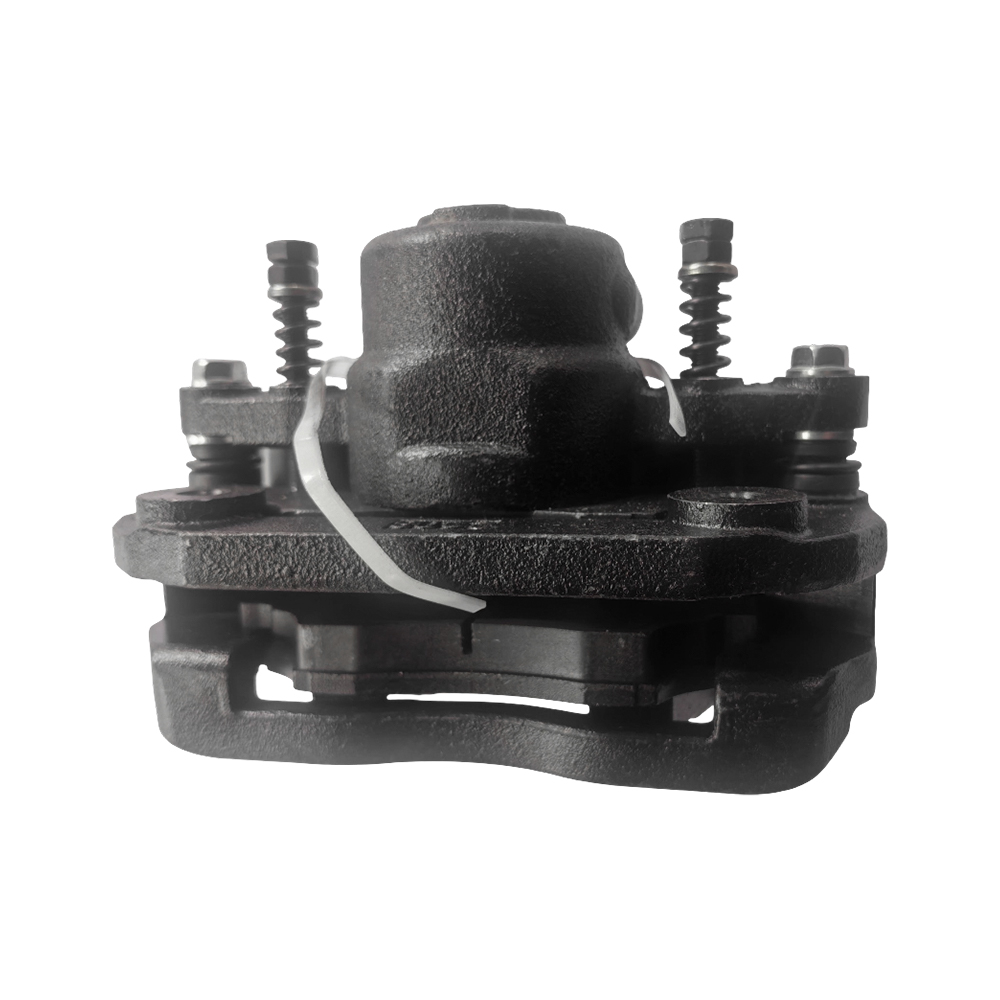
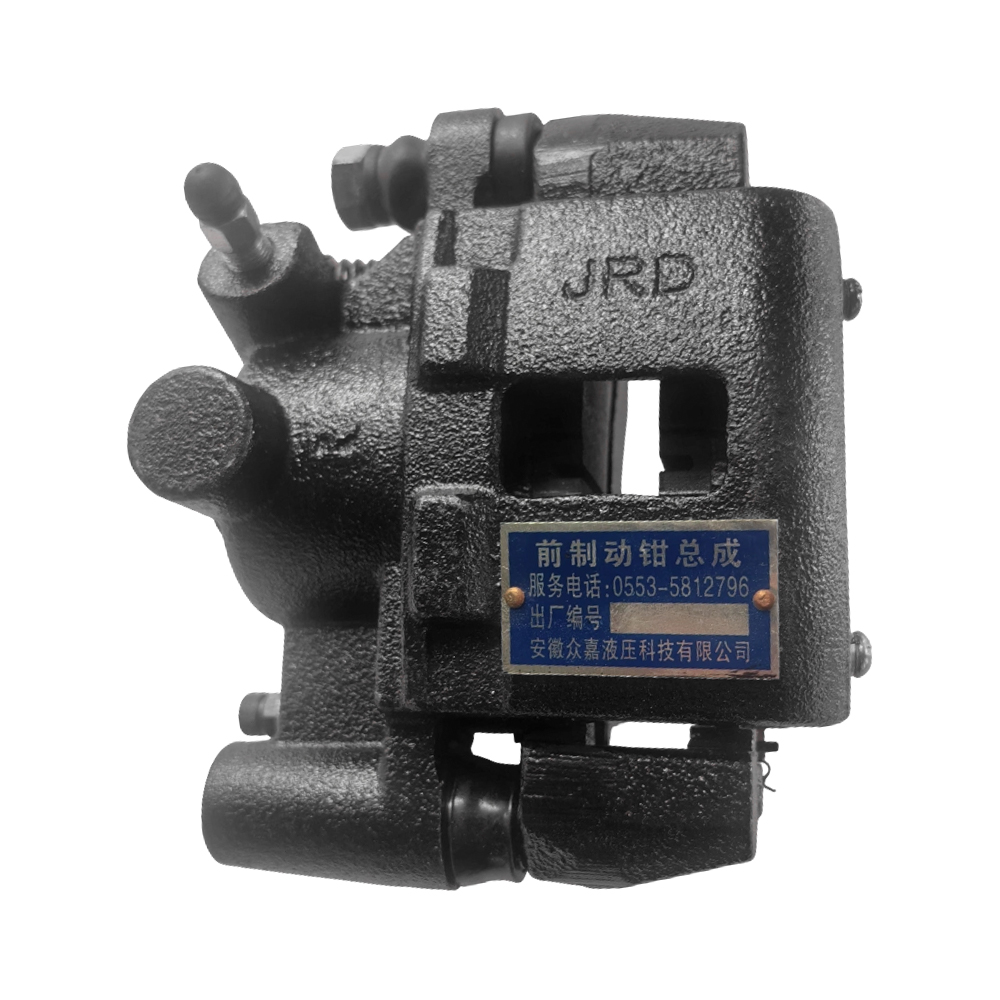
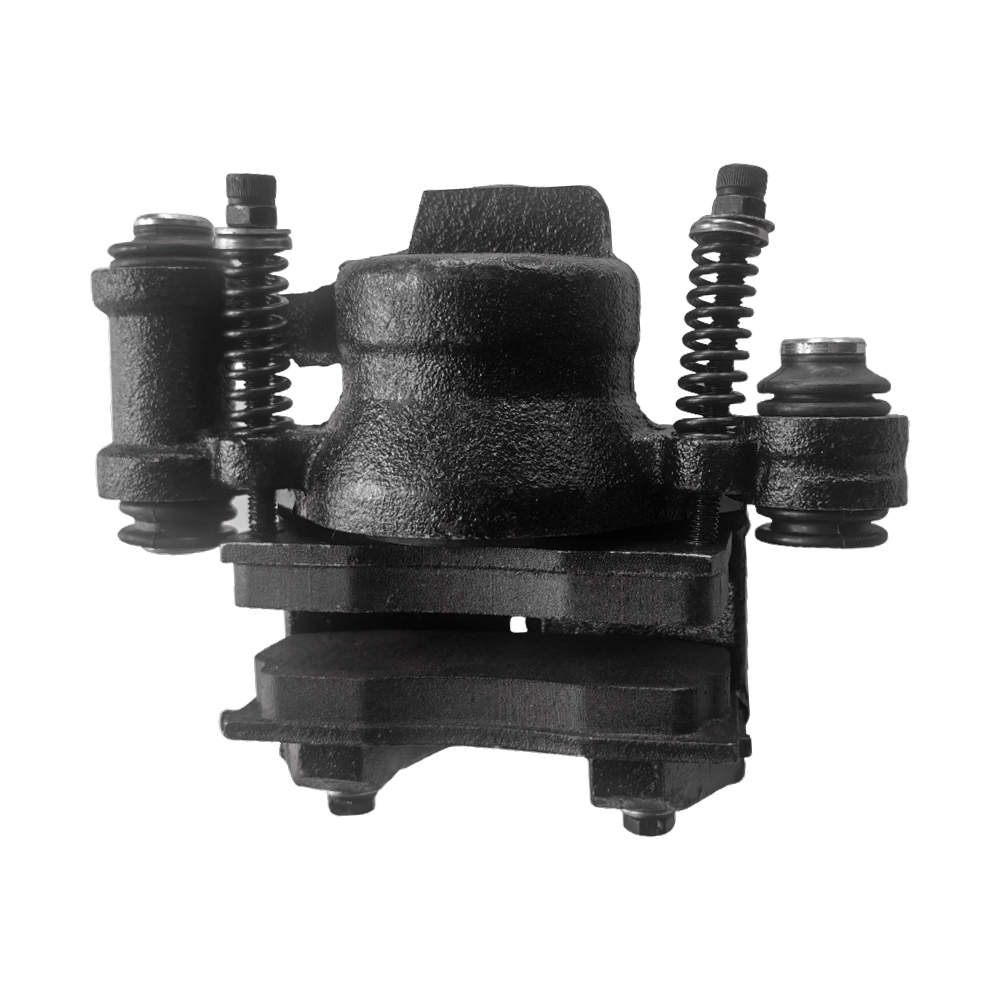
en

Need Help Now? Call Us!
+86-159 9623 5291

Our team proudly offers an on-time guarantee and a 100% customer satisfaction guarantee.
Contact Online


 Home / News / Industry News / 4-Way Solenoid vs. 2-Way Manual Valves: Spool Configuration and Circuit Design Guide
 2026.10.26
 Industry News
Content
Directional control valves are the decision-makers of a hydraulic system. Every time a machine raises a lift arm, tilts a bucket, or releases an implement, a spool inside a valve has shifted to reroute oil. Choosing between a 4-way solenoid directional control valve and a 2-way manual valve comes down to spool configuration, actuation method, and circuit design. This guide compares both valve types so you can match the valve to the actuator, the control system, and the operating environment.
The spool is a precision-ground cylindrical sliding element with machined lands and grooves. As it moves inside the valve bore, it connects different ports or blocks them. The term "ways" refers to the number of working ports the valve can connect, while "positions" refers to the number of discrete spool states.
2 ports, 1 flow path, on/off control
3 ports: pressure, actuator, tank
4 ports: P, T, A, B, reversible flow
A 2-position valve shifts between two working states. A 3-position valve adds a neutral center state that determines where oil flows when nothing is actuated. This difference in spool design has a large impact on circuit behavior. For a closer look at how shifting the spool moves hydraulic flow, read how a solenoid directional valve controls hydraulic flow.
A 4-way solenoid valve has four ports: pressure inlet (P), tank return (T), and two work ports (A and B). This spool configuration lets pressure reach one side of a double-acting cylinder while the other side exhausts to tank. When the solenoid shifts the spool, the connections swap, retracting the cylinder or reversing a hydraulic motor.
Solenoid actuation brings the valve into an electrical control loop. A coil moves the spool, allowing the valve to be triggered by a controller, relay, or cab switch. This makes 4-way solenoid valves the standard choice for automated routines, remote operation, and tasks that need repeatable timing.
The center position of a 3-position 4-way spool defines the behavior of the machine at rest:
These spool options are a circuit design decision, not just a valve detail. They define how the pump, actuator, and safety functions behave during idle periods. A compact example engineered for this role in mobile equipment is shown below.
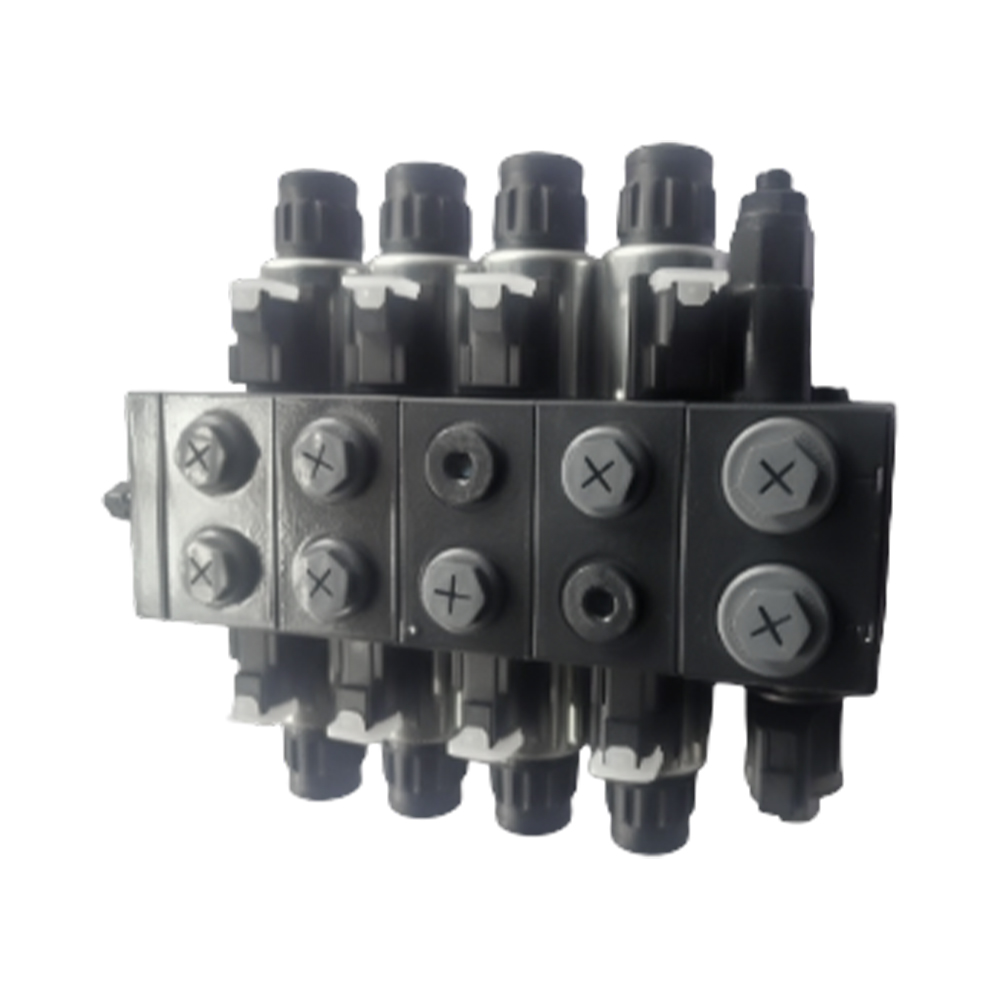 PDCF50 4-Way Solenoid Directional Control ValveThis electromagnetically controlled multi-way valve suits mobile equipment needing flexible circuit design. Its modular construction and durable cast body make it a practical option for complex hydraulic motion control systems.View Product →
A 2-way manual valve contains two ports and a single flow path. The spool opens the path to let oil pass or closes it to stop flow. With fewer lands and a shorter spool, the valve is compact, economical, and has fewer internal leakage paths than a 4-way design.
Manual actuation gives the operator direct control without wiring, controllers, or a power supply. These valves suit auxiliary functions on harvesting and agricultural equipment, where the operator is already at the machine and needs a simple way to engage or isolate a function.
In circuit design, the 2-way manual valve handles on/off supply, isolation, and dump duties. On grain harvesting machinery, for example, it connects or cuts flow to a fan or elevator drive. A typical example developed for this type of implement circuit is shown below.
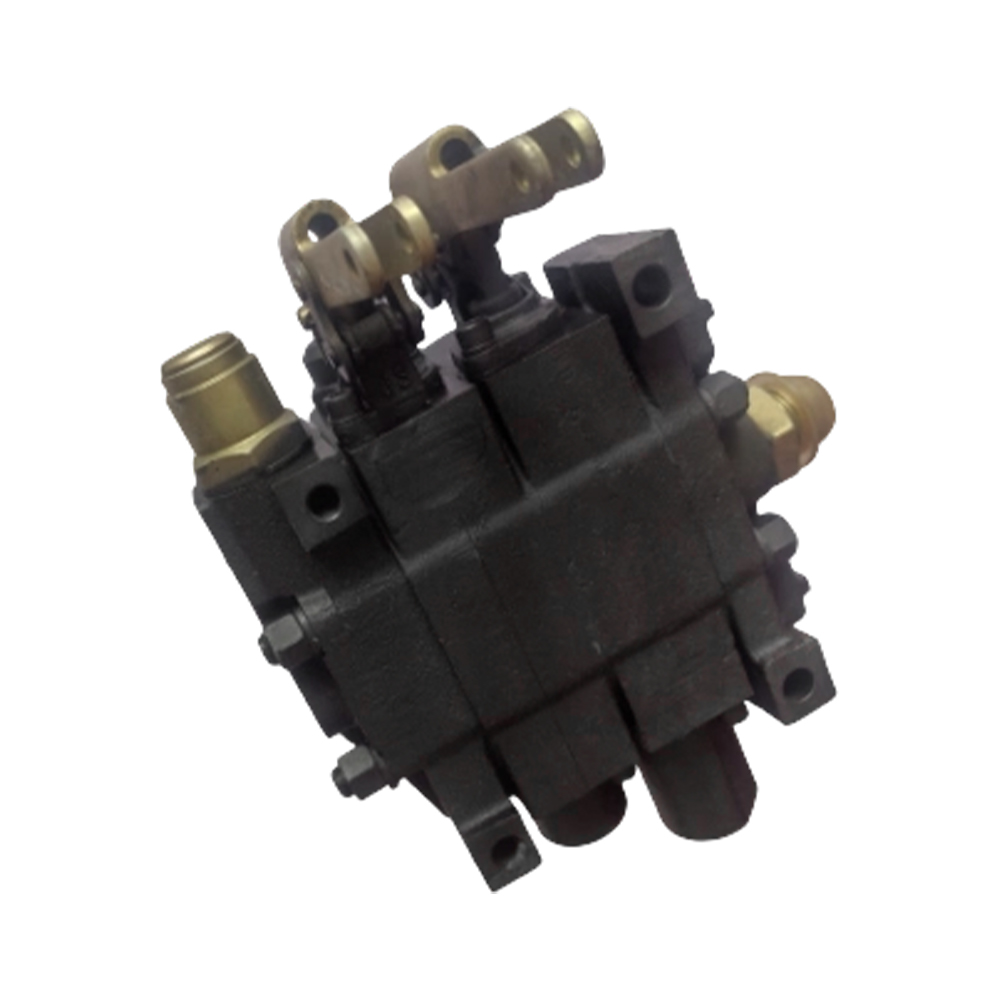 2-Way Manual Valve for Grain Processing EquipmentDesigned for switching and distributing grain flow, this compact manual valve offers wear resistance and leak-free operation. It suits flour mills, feed mills, and conveyor lines requiring simple, reliable material diversion.View Product →
| Design Parameter | 4-Way Solenoid Valve | 2-Way Manual Valve |
|---|---|---|
| Number of ports | 4 (P, T, A, B) | 2 (inlet, outlet) |
| Spool positions | 2 or 3 | 2 (open, closed) |
| Actuation | Solenoid coil | Lever or knob |
| Control input | Electrical signal | Operator hand |
| Neutral options | Open, closed, tandem | Not applicable |
| Supported actuator | Double-acting cylinders, motors | Simple flow on/off |
| Response speed | Fast, repeatable | Operator-dependent |
| Circuit complexity | Higher | Lower |
| Relative cost | Higher | Lower |
The comparison highlights a key point: these valves solve different problems. A 2-way manual valve delivers simplicity and direct control; a 4-way solenoid valve delivers reversibility and automation. Many machines use both, a manual valve for routine operator actions and a solenoid valve for automated sequences.
When you design a hydraulic circuit, the spool configuration must match the actuator and the control philosophy. Work through these points before making a selection:
Design rule: select the smallest spool configuration that satisfies the actuator and control requirements. Extra ways and positions add cost and pressure drop without improving machine performance.
For a broader decision framework, see how to select the right directional control valve for hydraulic systems.
Farm equipment shows the difference between these two valve families most clearly. In a combine harvester or a corn/wheat implement, a 2-way manual valve gives the operator direct control over secondary functions, simple to operate, easy to service, and tolerant of vibration and dirt.
Tractor hydraulic lift systems depend on precise, repeatable spool movement. Lift height, draft sensing, and automatic depth control are managed by solenoid-actuated spools. For tractor lift circuits, a dedicated solenoid valve design is shown below.
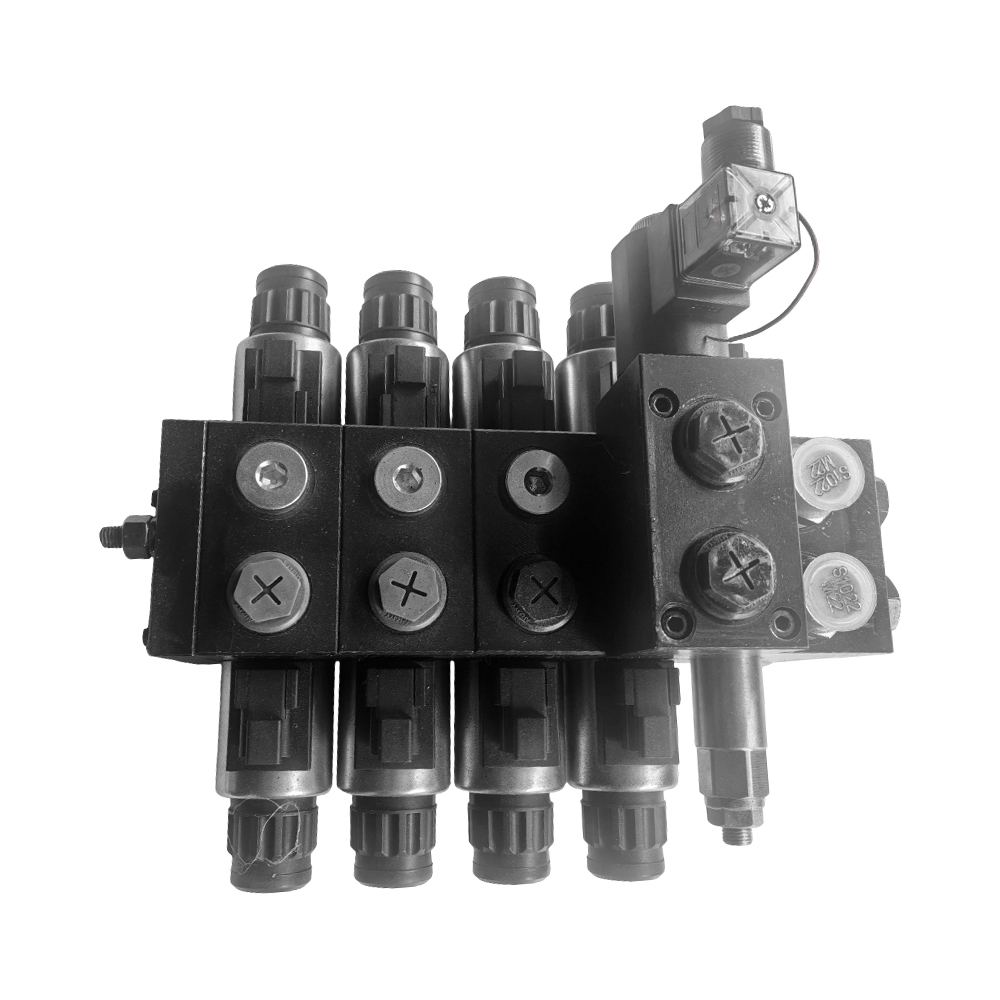 Hydraulic Solenoid Valve for Tractor Lift SystemsThis electrically controlled directional valve is built for large and medium tractor hydraulic lifts. It provides fast, smooth spool switching and pressure-resistant construction, supporting precise implement control in demanding agricultural tasks.View Product →
In the same way, 4-way solenoid valves power loader joysticks, steering circuits, and stabilized systems where automation improves productivity and operator comfort. Matching the valve family to the role, manual for operator-driven auxiliary tasks and solenoid for automated active control, is the practical shortcut to a well-designed mobile hydraulic system.
No. A double-acting cylinder needs pressure to alternate between two work ports, which requires a 4-way valve. A 2-way manual valve only opens or closes a single flow path, so it cannot reverse the cylinder by itself.
It can automatically reverse flow between two work ports using an electrical signal, and it offers flexible center positions, open, closed, or tandem, that support pump unloading, load holding, and safety logic.
The neutral position defines what happens when the valve is not actuated. A closed center holds the actuator in place on a stopped machine, while an open center allows free movement or drift. Selecting the correct neutral position is a critical part of safe circuit design.
The choice between a 4-way solenoid directional control valve and a 2-way manual valve is not about which valve is better. It is about which spool configuration fits the job. Use a 2-way manual valve for simple, operator-controlled flow paths. Use a 4-way solenoid valve when the circuit needs reversible flow, automated response, and a defined neutral state. Base the decision on the actuator, the control system, and the safety requirements of the machine, and the rest of the circuit design will follow.
Recommended Products

Contact Info.
+86-159 9623 5291
No. 5, Chuangye Road, Niandou Industrial Park, Ma'anshan City, Anhui Province, China
MOBILE QR CODE

 English
 Español