en

Need Help Now? Call Us!
+86-159 9623 5291

Our team proudly offers an on-time guarantee and a 100% customer satisfaction guarantee.
Contact Online


 Home / News / Industry News / Solenoid vs. Manual Directional Control Valves: Speed, Automation, Cost
  2026.10.12
  Industry News
 Content
Directional control valves direct the flow of hydraulic fluid and therefore shape the performance of the entire machine. Engineers and buyers often need to decide between solenoid directional control valves and manual directional control valves. That decision comes down to response speed, remote automation, and cost efficiency. This article compares both valve types across those three dimensions and provides practical guidance for your next design.
A directional control valve starts, stops, and directs hydraulic fluid to an actuator. The internal spool shifts to open or close passages, changing the direction of oil flow.
A manual directional control valve uses a lever or pedal to shift the spool. The mechanism is simple and reliable, but it requires a person physically near the machine.
A solenoid directional control valve uses an electric coil to shift the spool. It can be activated by a switch, PLC, relay, or remote system. Because no lever is needed, the valve can be mounted away from the operator and controlled electronically.
Solenoid valves convert an electrical signal into spool movement within tens of milliseconds. This quick, repeatable action is useful for high-cycle operations and synchronized machine movements.
Manual valves depend on the operator's hand speed and attention. Reaction times vary, and fatigue makes performance less consistent. For equipment that runs fast cycles, the solenoid valve is clearly ahead.
| Comparison Item | Solenoid Valve | Manual Valve |
|---|---|---|
| Actuation | Electric coil | Hand lever or pedal |
| Response time | Millisecond range | Operator-dependent |
| Cycle consistency | High | Variable |
| Remote control | Yes | No |
| Typical duty cycle | High-frequency | Low-frequency |
For demanding cycles, a compact solenoid unit such as the PDCF50 Series 4-way solenoid control directional valve is designed to keep every shift fast and consistent.
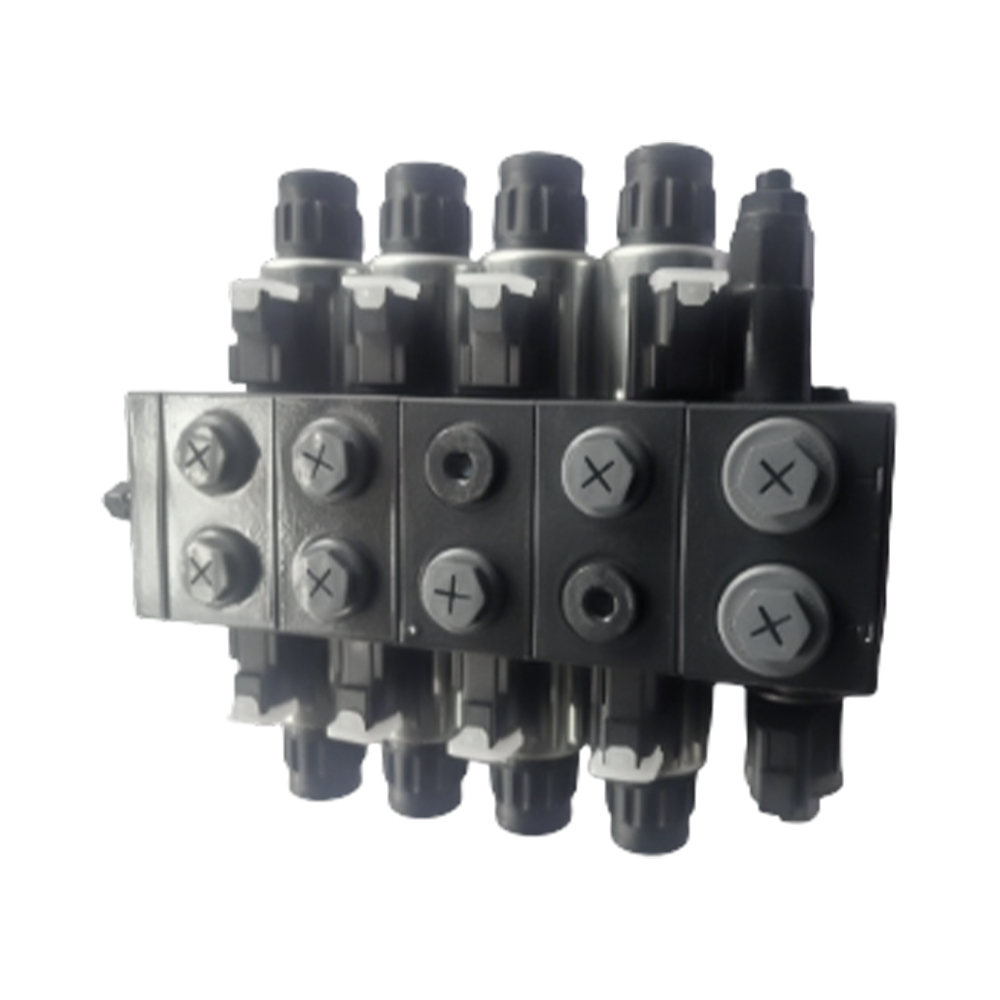 PDCF50 Electromagnetic 4-Way Directional Control ValveThis compact modular solenoid valve is highlighted for demanding duty cycles and supports direct PLC, CAN bus, or wireless actuation. Its durable cast body and waterproof coil suit modern hydraulic automation.View Product →
Automation changes how hydraulic valves are operated. Solenoid directional control valves can be driven directly by PLC outputs, CAN bus nodes, or wireless controls, which makes them easy to integrate into modern equipment.
Manual valves require someone to move the handle. In complex systems, that adds labor and increases the chance of error. Solenoid valves respond to a digital command, sometimes at a distance or as part of an automatic sequence.
In agricultural machinery, solenoid valves automate functions such as tractor lift control. You can learn more about how a solenoid directional valve controls hydraulic flow to see how the electronics interact with the hydraulic circuit.
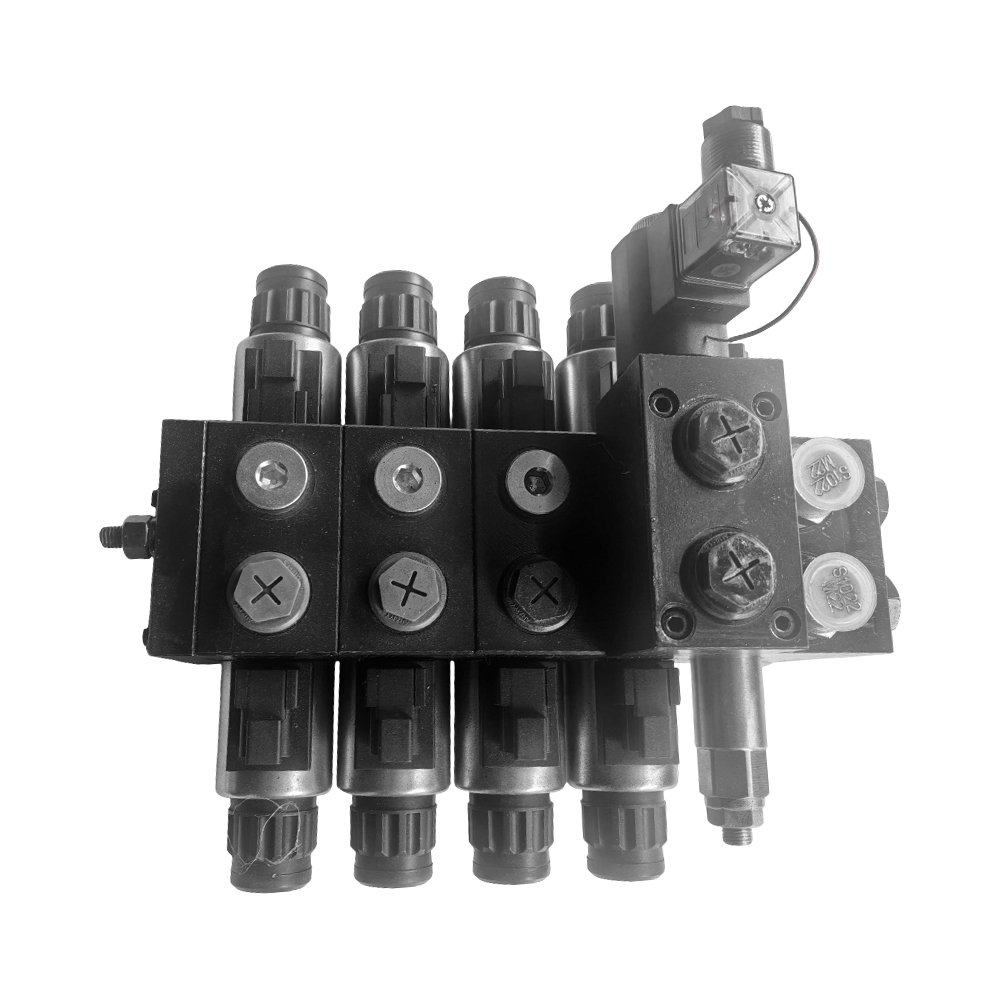 Hydraulic Solenoid Valve for Tractor Lift SystemsThis electrically controlled directional valve automates lifting, lowering, and floating positions on large and medium tractors. Its fast, smooth switching supports remote safety and efficient implement control in agricultural operations.View Product →
Remote control also supports safety. A solenoid valve can be de-energized automatically, returning the spool to a safe position faster than a person can react.
Manual directional control valves usually have a lower purchase price. They use no electronics, so initial cost is low and repair is straightforward. This makes them attractive for simple machinery with low cycle rates.
Solenoid valves cost more initially because of the coil, precision machining, and electrical components. However, they reduce labor, speed up production, and enable automation that lowers operating cost over time. When a machine runs thousands of cycles per day, the speed advantage becomes a direct financial benefit.
Maintenance also matters. Manual valves need inspection of the lever and spool; solenoid valves need electrical checks and coil testing. With clean hydraulic oil and stable voltage, both can provide long service life.
For simple duties where the operator is always present, a manual valve remains a sensible option. One example is the 2-way manual valve for corn and wheat machines, which provides reliable directional control without complex electronics.
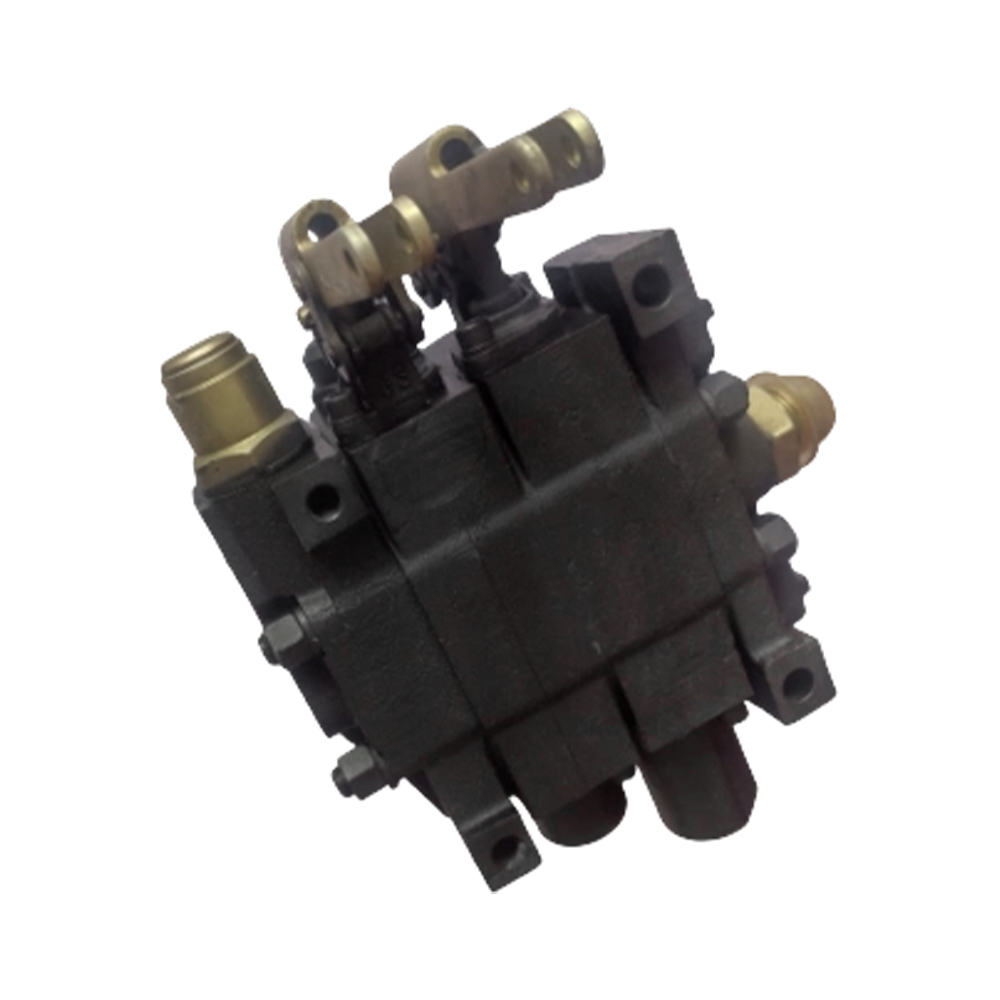 2-Way Manual Diverter Valve for Grain HandlingA simple manual valve for corn and wheat processing lines, this unit provides reliable material flow switching without electronics. Its compact, wear-resistant design suits flour mills, feed mills, and silo conveyor systems.View Product →
The best valve depends on the machine's control strategy, duty cycle, and budget. Ask these questions during the selection process:
Choose solenoid valves for fast response, remote control, and high-frequency machine cycles.
Choose manual valves for basic circuits, low duty cycles, and maintenance environments without electrical support.
Solenoid valves switch in milliseconds with consistent timing. Manual valves depend on the operator, so they are slower and less predictable.
It can be modified with an actuator, but the added complexity usually makes a solenoid valve the more practical choice for new designs.
Solenoid coils draw power only when energized. In many on/off and proportional valves, the consumption is modest and acceptable for the control benefits gained.
Solenoid and manual directional control valves both have a place in hydraulic systems. Solenoid valves provide faster response, remote automation, and easier integration with digital controls. Manual valves offer a simple, low-cost option when an operator is always present and the duty cycle is light. Evaluate your cycle rate, control architecture, and total cost to make the right call.

Contact Info.
+86-159 9623 5291
No. 5, Chuangye Road, Niandou Industrial Park, Ma'anshan City, Anhui Province, China
MOBILE QR CODE

 English
  Español

