en

Need Help Now? Call Us!
+86-159 9623 5291

Our team proudly offers an on-time guarantee and a 100% customer satisfaction guarantee.
Contact Online


 Home / News / Industry News / Specialized Brakes for Grain Harvesting: Thermal Dissipation in Field Use
 2026.11.16
 Industry News
Content
Grain harvesting is one of the most demanding applications for a braking system. A combine harvester or corn header constantly stops, turns, reverses, unloads, and moves between fields, often in high ambient temperatures and heavy dust. Under these conditions, the brakes are not used occasionally; they are used continuously. Heat builds up in the calipers, friction material, and hydraulic fluid. If that heat is not dissipated quickly, performance fades and the machine can become unsafe.
Specialized brakes for grain harvesting therefore combine robust materials, carefully sized hydraulic circuits, and layouts that let heat escape during sustained field work. This article explains why heat builds up, how it should be controlled, and what to check before selecting or maintaining a harvesting brake.
During field operation, a harvester is heavy and rolling resistance is high. Every stop converts kinetic energy into heat through friction. Unlike a car that travels long distances between stops, a harvester brakes repeatedly at the end of each pass. The interval between brake applications can be seconds or minutes, not hours.
Several factors make thermal management especially difficult:
When temperatures climb, the friction coefficient of the pad changes. Brake fade can appear as a longer pedal stroke, reduced stopping force, or noise. Worse, overheated fluid may vaporize in the master cylinder or caliper, creating compressible vapor bubbles and a sudden loss of braking pressure.
| Brake temperature range | Typical effect | Risk level |
|---|---|---|
| Below 150 deg C | Stable friction and consistent stopping | Low |
| 150-250 deg C | Initial fade and increased pad wear | Moderate |
| 250-350 deg C | Strong fade, seal stress, fluid degradation | High |
| Above 350 deg C | Complete fade, vapor lock, component damage | Critical |
Heat enters the brake at the friction interface and travels by conduction into the caliper body, piston, and fluid. Convection carries some heat to the air, while radiation releases energy from exposed metal surfaces.
In a grain field, airflow is often blocked by debris shields and chaff, which acts as an insulating blanket. This is why mechanical layout matters as much as material conductivity.
A harvesting brake caliper should expose maximum surface area to cooling air and conduct heat away from the pad zone. On the hydraulic side, larger fluid volume and port placement allow heated fluid to move away from the friction area.
Thermal dissipation depends on the caliper, friction material, fluid, and hydraulic circuit working together.
Specialized harvesting brakes use several strategies to reject heat more effectively than standard industrial brakes.
A rigid, high-conductivity caliper body moves heat away from the friction interface. Agricultural brake calipers are often made from ductile iron, which offers strength, dimensional stability, and thermal capacity. Ribs or raised sections increase the surface exposed to air.
The pad material must keep a stable friction coefficient across a wide temperature range. Low-metallic and semi-metallic materials are common because they tolerate high surface temperatures and release heat predictably.
High-temperature elastomer seals keep their shape after hard thermal cycling. Brake fluid should also have a high boiling point, since moisture absorbed from humid field conditions lowers it over time.
For a complete integration, the caliper must work with the rest of the hydraulic braking system. The specialized brake for corn and wheat harvesting machinery is built around the duty cycle of harvest work, with attention to thermal mass, piston travel, and sealing.
 Hydraulic Brake for Corn and Wheat Harvesting MachineryThis brake is built for combine harvesters, with heavy-duty sealing and durable alloys for dusty field conditions. It is featured here because the surrounding text explains how master cylinder sizing affects fluid pressure and pedal feel, making this component relevant to complete hydraulic brake integration.View Product →
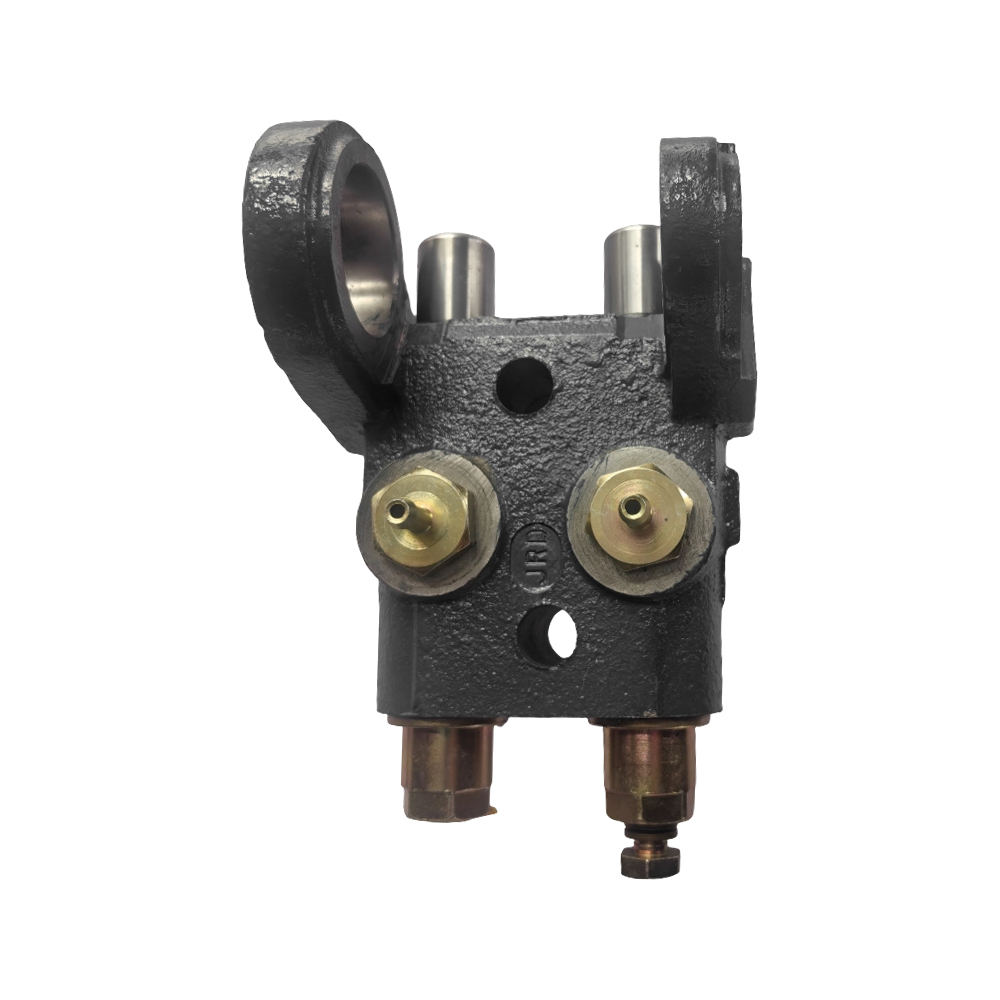
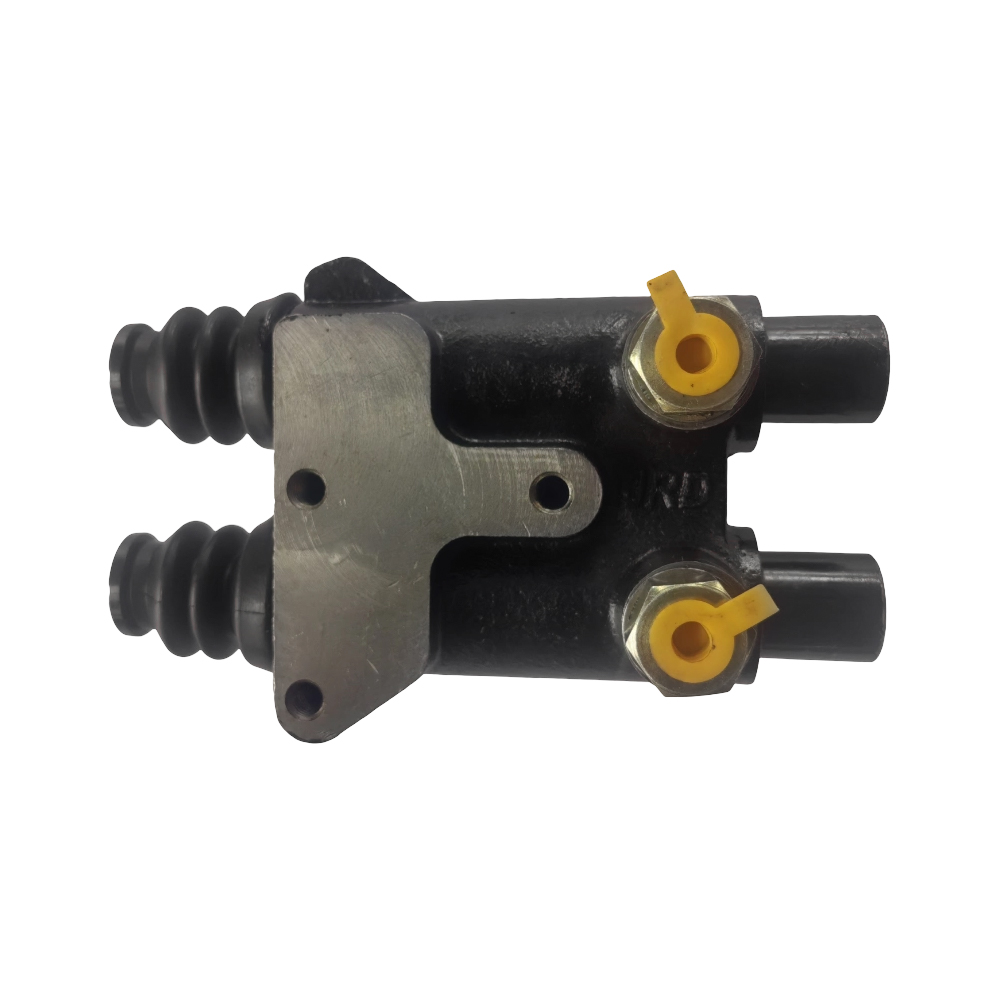
The caliper receives fluid from a master cylinder, and fluid volume and pressure directly affect heat generation and removal. A master pump that is too small creates high pressure losses and more pedal effort. A correctly sized dual-cylinder master pump supplies stable flow and consistent pedal feel even after repeated stops.
In grain harvesters, hydraulic lines should be routed away from exhausts, belts, and other heat sources. Hoses close to hot surfaces can heat the fluid prematurely and reduce the safety margin.
Good thermal management means matching the master cylinder, caliper piston area, wheel size, and brake torque to the field duty cycle, not simply choosing a larger part. A useful starting point is to understand how the agricultural machinery braking system applies pressure and releases heat.
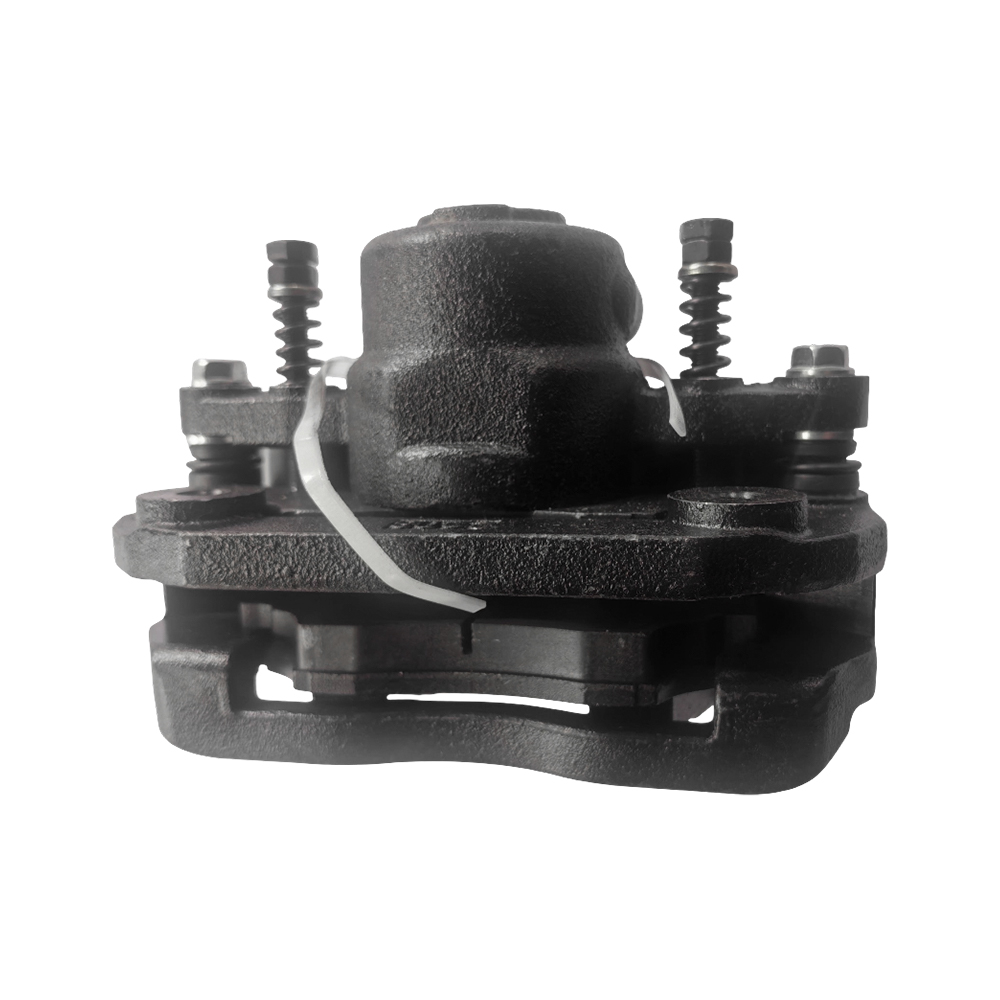
On the caliper side, the brake caliper for corn and wheat combine harvester fits the hydraulic layout of a modern grain harvester. Its compact structure also reduces the amount of fluid required for fast release, while retaining enough thermal capacity for repeated stops.
 Combine Harvester Brake Caliper with Compact DesignA high-strength cast-iron caliper that converts hydraulic pressure into clamping force for grain harvesters. The preceding paragraph highlights its compact structure and thermal capacity, so this caliper is worth reviewing when matching fluid volume and release speed to the rest of the braking system.View Product →
No thermal design is complete without testing. Repeated stop tests, thermal cycling, and simulated headland operation expose weak points in seals, friction materials, and fluid selection.
Field validation is even more important because it adds dust, crop residue, and uneven terrain. A brake may perform well on a test bench but fail in a combine when chaff blocks airflow around the wheel end.
For buyers, this knowledge is captured in application notes and engineering guides. An agricultural machinery braking system engineering guide explains the relationship between brake design, heat load, and service life.
Even a well-designed brake can overheat if maintenance is poor. In harvesting conditions, daily checks are the first line of defense.
Thermal dissipation is also affected by the wheel end. A tight bearing adds friction and heat; a loose bearing causes disc wobble. Proper bearing adjustment is therefore a thermal management issue.
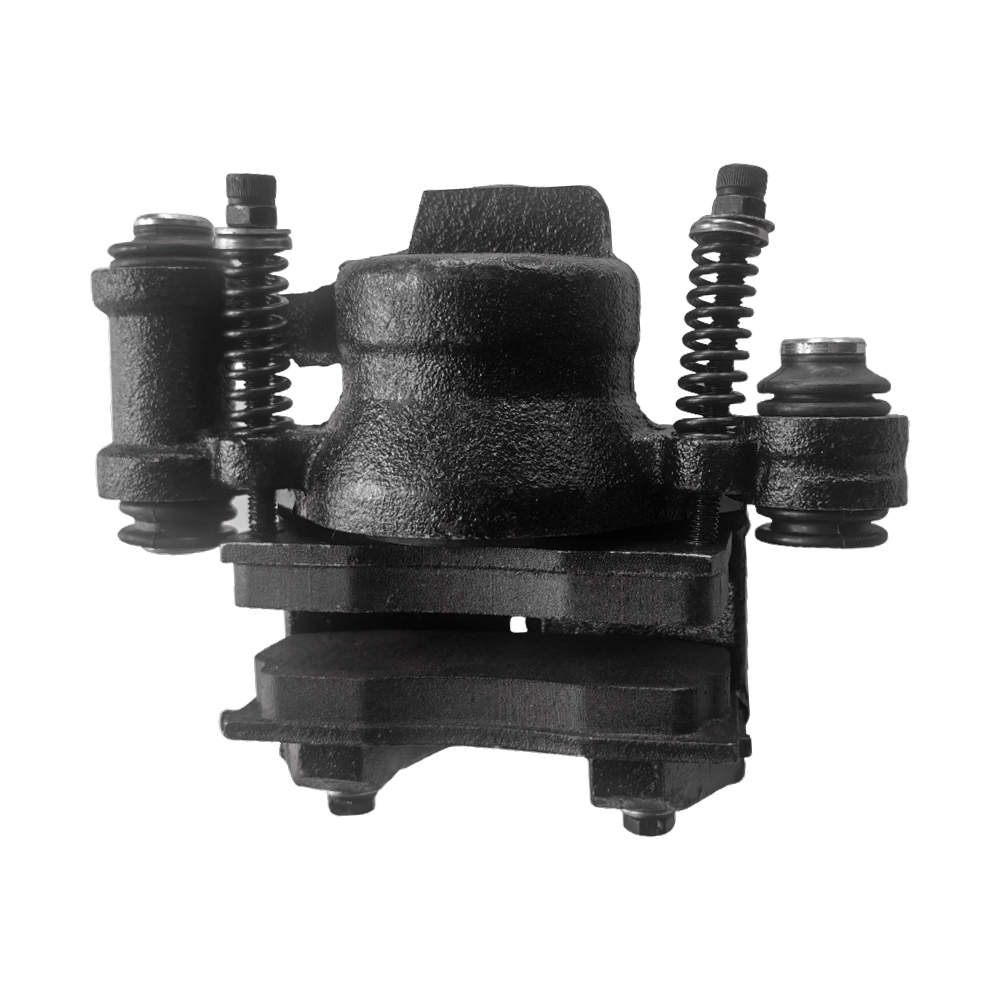
When replacement is needed, choose a component that matches the original hydraulic specification. The brake caliper for corn and wheat harvesting machinery is designed for harvesting equipment, with mounting and port configurations that suit common grain harvesters.
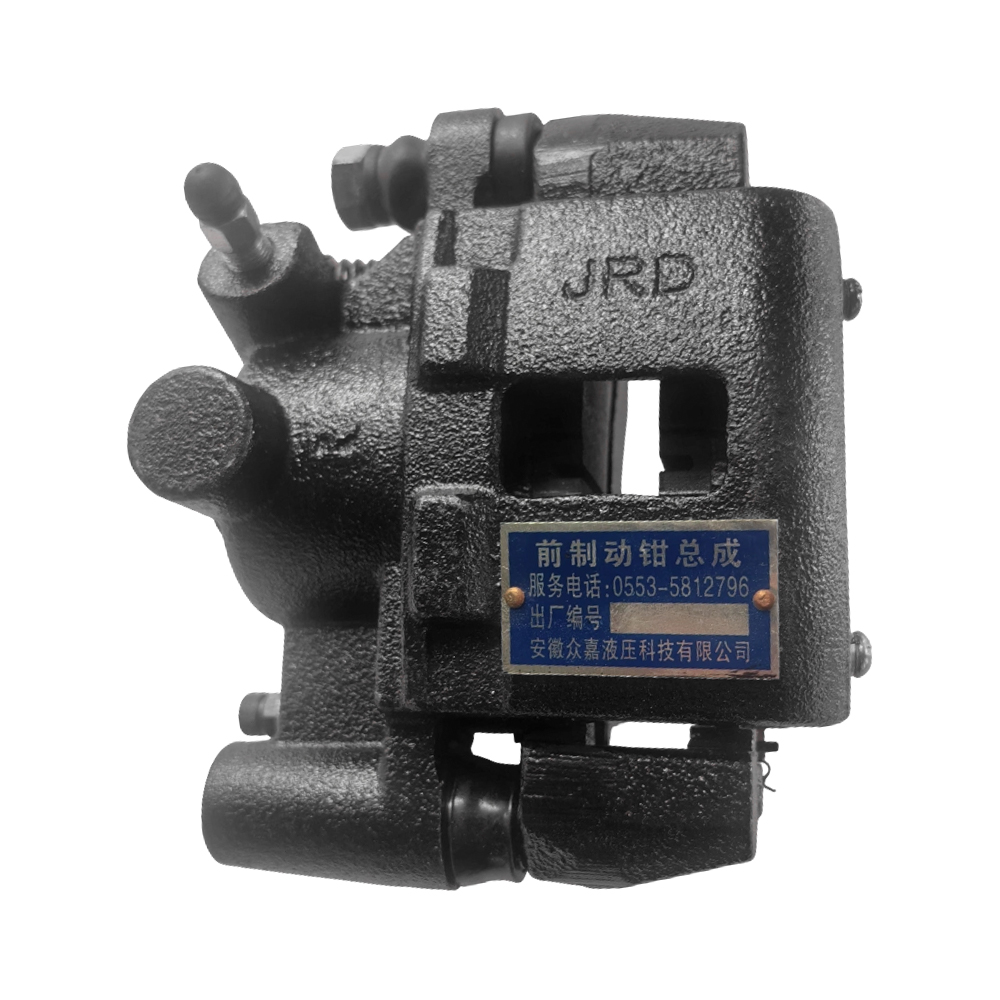 Harvester Brake Caliper for Standardized ReplacementThis hydraulically driven caliper suits large and medium combine and forage harvesters, with standardized mounting for quick installation. It appears after guidance on matching original hydraulic specs, making it a practical option for replacement when thermal requirements, not just peak torque, drive the selection.View Product →
When selecting a brake for a grain harvester, focus on thermal requirements, not just peak torque.
By following this checklist, an OEM or machine owner can avoid installing a brake that stops the wheel once but cannot survive a full afternoon of field work.
Signs include a longer pedal stroke, a burning smell, discolored brake fluid, reduced stopping force after consecutive stops, and heat cracks on the disc.
Use a DOT 4 or higher-grade fluid that meets the manufacturer's specification. In dusty, humid environments, change it more often because moisture lowers the wet boiling point.
Many harvesting machines use solid discs with specialized calipers because ventilated discs can collect debris. The priority is a caliper and pad combination with high thermal stability, matched to the actual field duty cycle.
Recommended Products

Contact Info.
+86-159 9623 5291
No. 5, Chuangye Road, Niandou Industrial Park, Ma'anshan City, Anhui Province, China
MOBILE QR CODE

 English
 Español