en

Need Help Now? Call Us!
+86-159 9623 5291

Our team proudly offers an on-time guarantee and a 100% customer satisfaction guarantee.
Contact Online


 Home / News / Industry News / How Solenoid Valve Internal Leakage Impacts Hydraulic Cylinder Holding Pressure
 2026.11.09
 Industry News
Content
Hydraulic cylinders are built to do two things: move a load and hold it still. The holding part is easy to overlook when the pump is running, but every machine relies on it. When a solenoid directional valve develops internal leakage, the cylinder quietly loses the ability to hold pressure, and the load begins to drift.
Internal leakage is one of the most common causes of weak holding pressure in agricultural, construction, and industrial hydraulic systems, yet it is barely visible from the outside. This article explains what internal leakage is, how it destroys cylinder holding pressure, what symptoms it creates, and how to prevent it with the right valve selection and maintenance.
A solenoid directional valve directs hydraulic flow by moving a precision spool inside a cylindrical bore. In its centred position, the spool lands are designed to block the cylinder ports so that oil cannot pass between the pressure port, tank port, and cylinder ports. No spool fits a bore with zero clearance, however. A thin film of oil always remains in the radial gap between spool and bore, and internal leakage is the flow that crosses that gap past the spool lands.
The most frequent causes of rising internal leakage include:
Spool and bore wearContaminated oilScored sealing surfacesWeak return springsInsufficient solenoid forceLow oil viscosityLoose manufacturing tolerance
Abrasive particles in the oil act like grinding paste. They enlarge the radial clearance between the spool and its bore, and even a tiny increase in clearance produces a disproportionate rise in leakage.
In a typical annular gap, leakage flow increases with the third power of the radial clearance. Doubling the clearance can multiply internal leakage by roughly eight times.
Holding pressure exists only when the directional valve closes off the cylinder ports and traps oil on both sides of the piston. If the spool seals perfectly, the trapped oil behaves like a rigid column and the cylinder keeps the load at a fixed position. The moment oil escapes across the spool lands from the cylinder port to the tank port, the trapped volume begins to shrink.
Because cylinder force is the product of pressure and piston area, the falling pressure reduces the holding force. When that force drops below the load, the cylinder drifts downward or outward. With severe leakage, the pressure collapses almost instantly and the load drops without warning.
| Leakage Severity | Pressure Decay Rate | Typical Machine Symptom |
|---|---|---|
| Insignificant | Very slow | No visible drift in normal operation |
| Moderate | Within seconds or minutes | Load sinks after the valve is centred |
| Severe | Near-instant | Cylinder collapses as soon as the valve shifts |
On a tractor, the three-point hitch keeps an implement at working height through the lift cylinder. A leaking lift-control valve lets the implement sink steadily, forcing the operator to readjust all day. In extreme cases, an implement drops to the ground during a turn or settles overnight, which can damage both the implement and the machine. The same problem appears on combine harvesters, where cutting platforms lose their set height and reduce harvest quality.
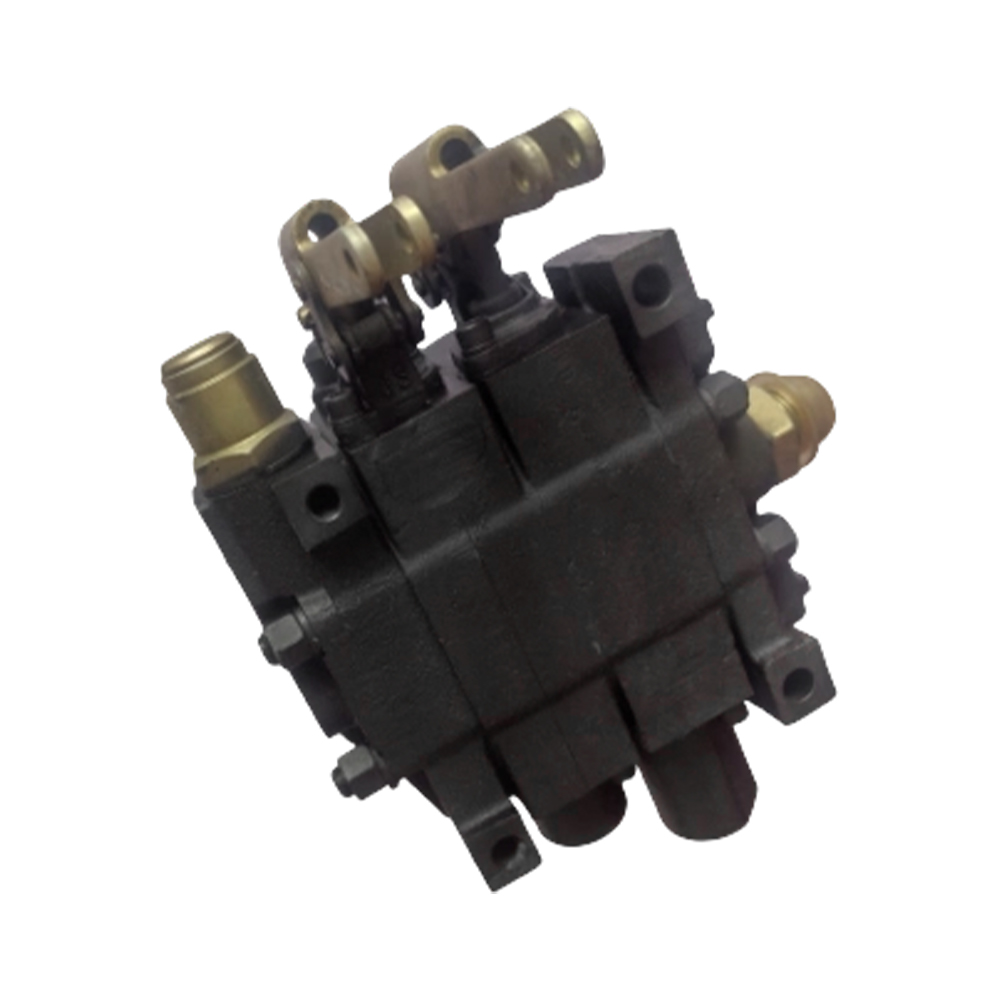
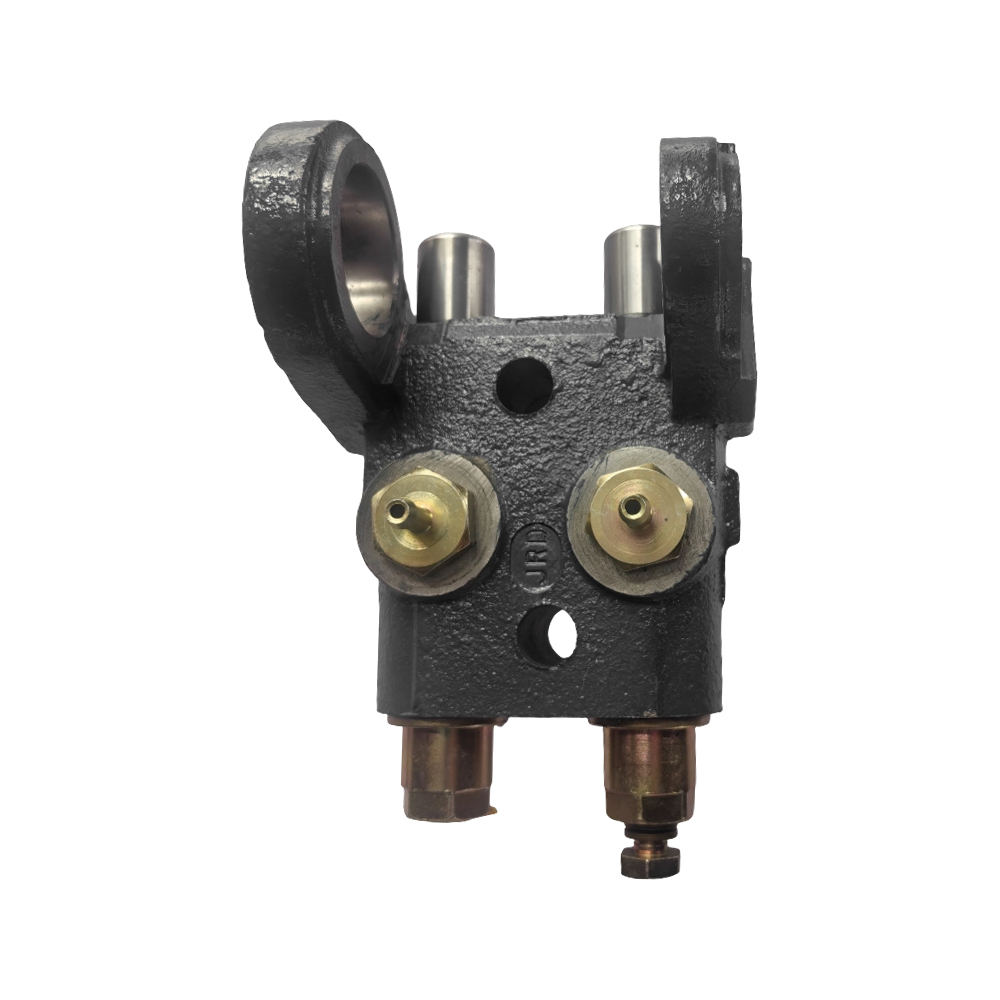
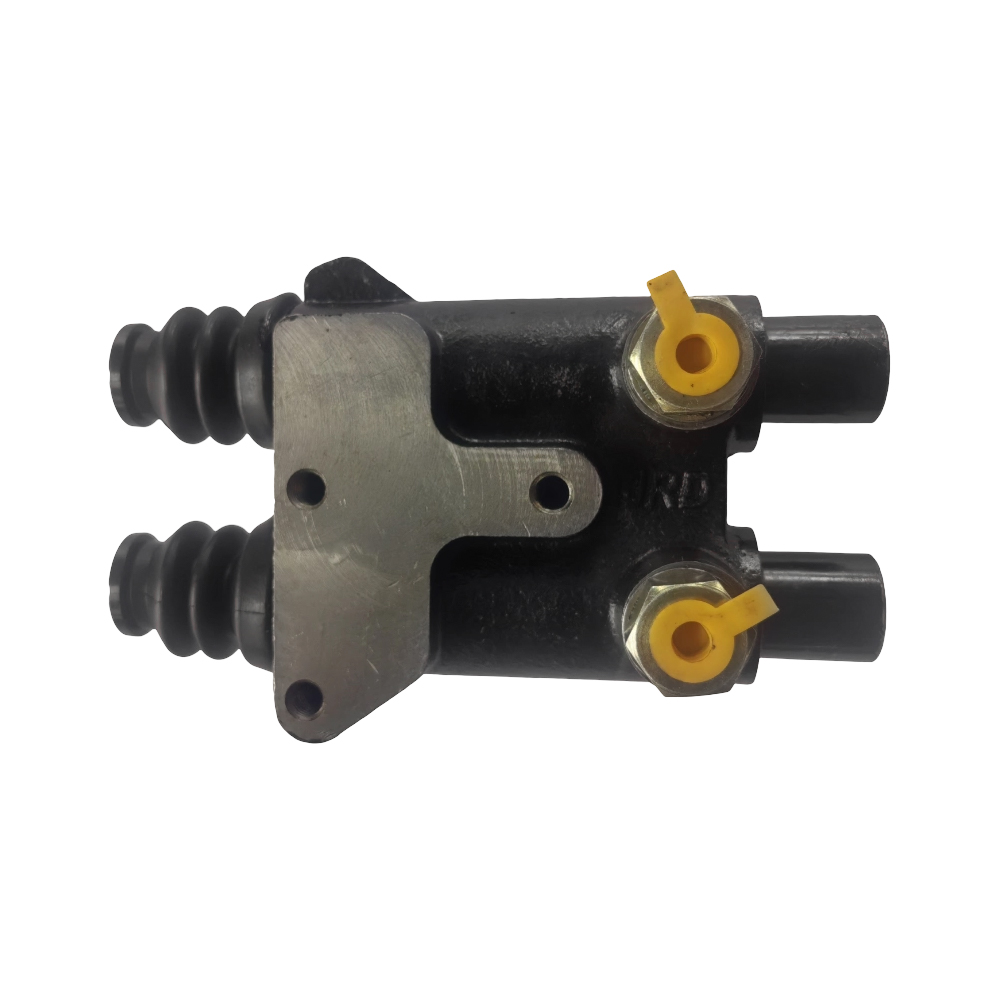
 Hydraulic Solenoid Valve for Large and Medium Tractor Lift SystemsThis electrically controlled directional valve manages lifting, lowering, and floating of tractor implements with fast response and robust construction, making it a reliable solution for preventing implement drift and maintaining consistent working height.View Product →
Tractor lift circuits therefore need valves with tight internal clearances and consistent spool geometry. Choosing a valve designed for continuous holding duty greatly reduces the risk of drift.
Excavator booms, loader arms, and industrial presses all use solenoid-operated locks to hold heavy loads in place. When internal leakage develops, the boom slowly lowers on its own, a loaded arm drifts out of position, or a press loses clamping force in the middle of a cycle. In these applications, unexpected movement is not just a quality problem; it is a safety hazard.
Internal leakage does not stop after the machine finishes its move. Every litre of oil that leaks across the spool must be replaced by the pump, consuming engine power and converting hydraulic energy into heat. Higher oil temperature lowers viscosity, which raises leakage further. The result is a self-reinforcing loop: hotter oil, more leakage, more heat.
A machine that runs hotter, consumes more fuel, and drifts more as the day warms up is showing the classic signature of internal valve leakage.
Internal leakage is invisible, but it produces measurable behaviour. A simple pressure-decay test locates the problem in minutes without removing the valve from the machine.
Understanding how valve shifting creates these leakage paths makes diagnosis much easier. See how a solenoid directional valve controls hydraulic flow before you test.
Clean oil is the most effective way to protect spool and bore surfaces. Use proper filtration, change oil according to the machine schedule, and keep reservoir breathers sealed against dust and water ingress.
Not every directional valve is suited for holding-pressure applications. Valves with a positive spool overlap and precision-ground spools manufactured to tight tolerances keep internal leakage low even after thousands of cycles.
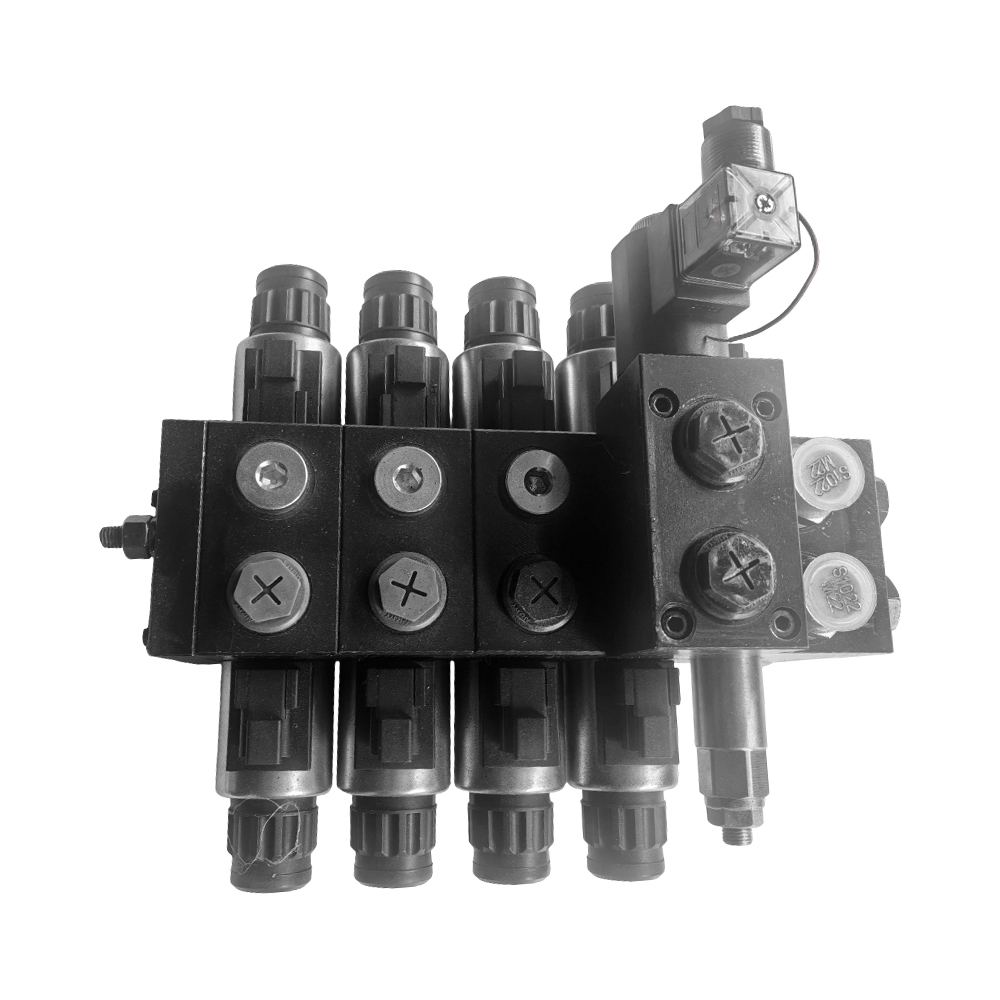
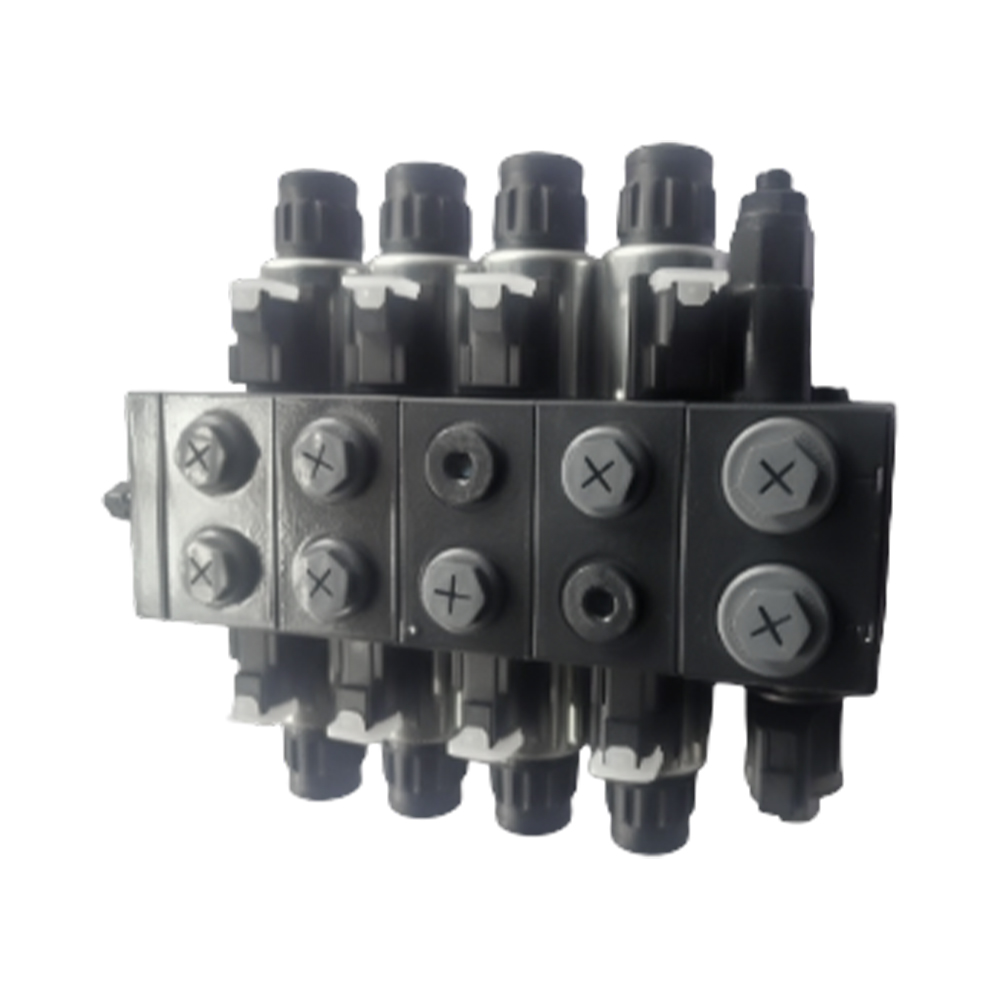 PDCF50 4-Way Solenoid Control Directional Valve with Modular DesignThis electromagnetically controlled multi-way valve features modular functionality and precision-ground spools with controlled clearances, supporting stable holding behavior in hydraulic circuits, suitable for demanding agricultural and industrial equipment applications.View Product →
This PDCF50 4-way solenoid control directional valve is designed with controlled clearances that support stable holding behaviour.
When sizing a valve, match the flow requirement rather than oversizing it, and verify the spool style before ordering. For a complete overview of specification criteria, read how to select the right directional control valve for your hydraulic system.
Yes. The pressure-decay test is the most practical method. Lock the circuit with the valve centred, pressurise the cylinder, and watch the pressure gauge. A slow steady drop with no visible external leak usually points to internal leakage across the spool.
Warm oil has lower viscosity and passes through spool clearances more easily. A valve that appears tight on a cold morning can leak significantly after an hour of operation, which is why drift often worsens over a work shift.
No. Larger valves typically tolerate wider spool clearances because they handle higher flows, and a larger valve may have more leakage than a correctly sized one. Matching valve capacity to the actual flow is more important.
Yes. Leaking oil returns to tank at high temperature and must be pumped again, increasing wear on the pump, raising oil temperature, and stressing seals throughout the circuit. Long-term internal leakage shortens the life of the whole hydraulic system.
Solenoid valve internal leakage is a direct driver of holding-pressure failure, cylinder drift, wasted energy, and component wear. By understanding why spools leak, testing the valve instead of only the cylinder, and selecting valves designed for holding duty, machine owners can solve drift problems at the root and keep hydraulic systems productive for years.
Recommended Products

Contact Info.
+86-159 9623 5291
No. 5, Chuangye Road, Niandou Industrial Park, Ma'anshan City, Anhui Province, China
MOBILE QR CODE

 English
 Español