en

Need Help Now? Call Us!
+86-159 9623 5291

Our team proudly offers an on-time guarantee and a 100% customer satisfaction guarantee.
Contact Online


 Home / News / Industry News / Detent Mechanism in Manual Directional Valves: Function and Selection Guide
  2026.09.10
  Industry News
 Content
On a combine harvester, the grain-tank fold-out cylinder has to stay extended through an entire unloading cycle. If the operator keeps a thumb on the manual directional valve lever for that long, machine control drifts and fatigue sets in. A detent mechanism solves exactly this problem: it locks the valve spool in the selected position so the hydraulic function continues hands-free. In manual directional valves used on agricultural and mobile equipment, the detent is often the most used feature on the valve and the first one to wear out.
A detent mechanism in a manual directional valve locks the valve spool in a selected position so the hydraulic circuit continues without the operator holding the handle. The spool stays in the A or B position, the cylinder stays extended, and the motor keeps turning.
The usual construction is a hardened ball and a spring set into the valve body. The spool has machined notches at each detent position. When the operator moves the handle, the ball rides over the notch edge and seats into the groove. The spring force presses the ball against the spool, and that force is what resists unwanted movement.
Detent definition
A detent is a mechanical holding device that temporarily prevents a spool from leaving a selected position by applying spring force against a notch machined into the spool.
A detent does not change the flow rate, the pressure setting, or the direction of the oil. It only changes the force required to move the spool. This lets the operator select a position, let go of the lever, and keep working elsewhere while the hydraulic function stays active.
Spring return moves the spool back to neutral as soon as the operator releases the handle. A detent keeps the spool in place. The practical difference is whether the operator can leave the lever unattended.
| Attribute | Spring return | Detent |
| Spool return | Automatically to neutral when released | Stays in selected position |
| Operator effort | Continuous hand pressure | Hands-free after one shift |
| Typical task | Loader bucket lift, intermittent control | Cylinder hold, motor drive, float position |
| Failure mode | Return spring breakage | Detent wear, loss of holding force |
Detent rule of thumb
If a hydraulic function has to run longer than about ten seconds, spring return creates unnecessary operator fatigue. A detent is the correct mechanical choice and usually costs no more.
On agricultural equipment, the most common detent use is holding a hydraulic motor running or a cylinder extended for a full work cycle. A corn and wheat combine provides the clearest case: the discharge auger drive must keep turning while the operator manages the grain tank.
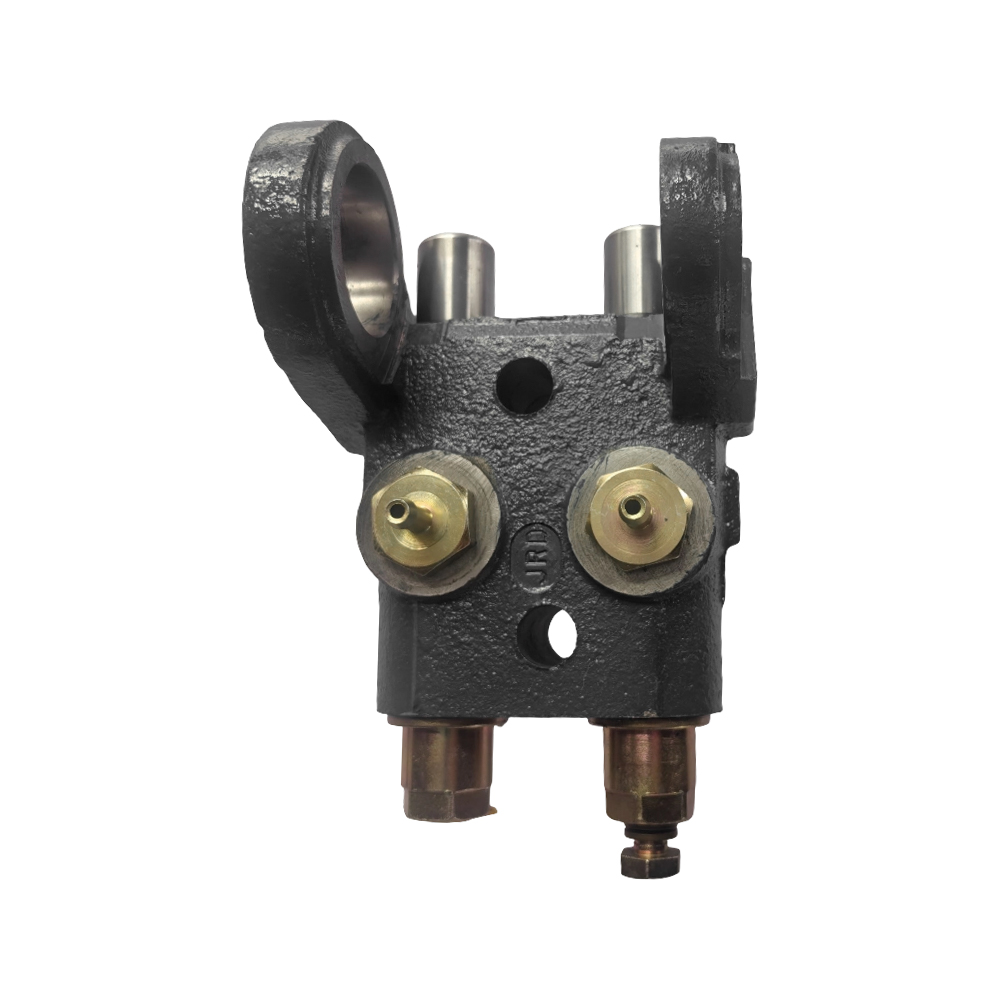
Anhui Zhongjia Hydraulic Technology Co., Ltd. supplies manual directional valves for this type of machine. A 2-way manual valve for corn and wheat is typically configured with a detent so the operator can shift once and let the cylinder stay in position.
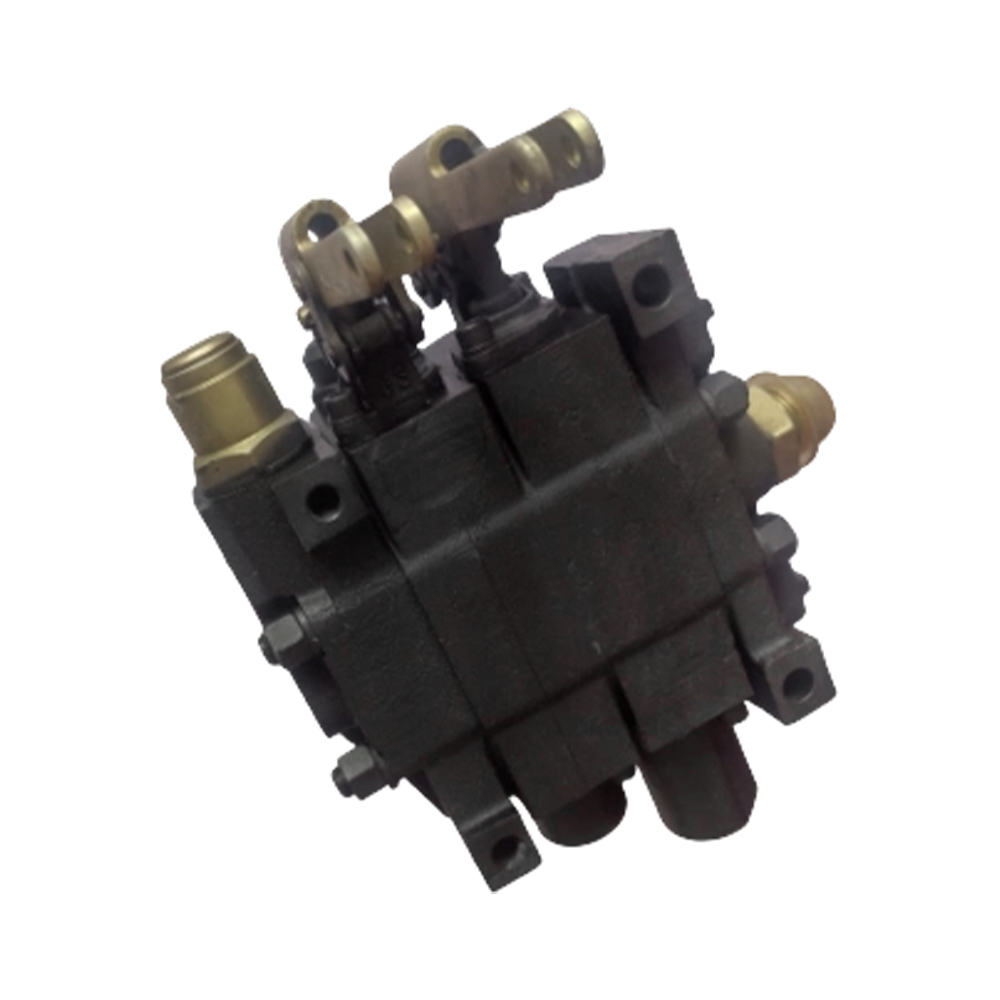 2-Way Manual Valve with Detent for Corn and Wheat Grain HandlingThis manual valve is designed for grain diversion in corn and wheat processing. Its detent feature holds the spool position, reducing operator effort. The compact, wear-resistant body suits pipelines in mills, feed plants, and silo systems for reliable switching.View Product →
On a tractor loader, the float position is often a detent position. The operator lowers the bucket, engages float, and lets the valve hold the spool while the bucket follows the ground contour. Without a detent, the lever would need to be held in place manually, which makes grading rows and loading work much harder.
When a detent is worth specifying
Continuous hold, hands-free work, or a function that must stay on while the operator does something else.
Detent holding force is the force required to pull the spool out of its detent position. It is measured in Newtons and depends on the spring rate, the notch angle, and the spool diameter.
Typical detent holding force ranges for common monoblock spool sizes
Larger spools move more flow and generate more side load, so they need more holding force. If the spool is larger than 12 mm, the detent geometry is usually redesigned with two balls instead of one to keep the lever effort acceptable.
A worn detent announces itself as a spool that drifts back to neutral or releases before the operator wants it to.
Replacement rule
If the holding force drops below roughly 30 percent of the new value, replace the detent or the complete valve. A drifting cylinder is a safety risk on any lifting device, not just a performance problem.
Selection starts with the function. Continuous holding and hands-free operation are exactly what the detent provides, so decide first whether the operator will let go of the lever.
For a deeper look at spool types, port patterns, and sizing, read manual directional valve fundamentals.
A detent locks the spool in a selected position so the hydraulic function continues without the operator holding the handle. It is the mechanical equivalent of a hold button.
Yes, but choose the detent carefully. Float position is usually equipped with a detent, while lift and tilt positions typically stay spring return so the operator retains direct control.
Typical detent holding force for an 8-10 mm spool is around 30-60 N. The exact figure depends on the spring rate and the notch profile.
The main causes are wear of the spool notch, contamination inside the detent pocket, and spring fatigue. In practice, notch wear is the most common reason a valve drifts out of position.
Recommended Products

Contact Info.
+86-159 9623 5291
No. 5, Chuangye Road, Niandou Industrial Park, Ma'anshan City, Anhui Province, China
MOBILE QR CODE

 English
  Español