en

Need Help Now? Call Us!
+86-159 9623 5291

Our team proudly offers an on-time guarantee and a 100% customer satisfaction guarantee.
Contact Online


 Home / News / Industry News / Why Is the Brake Caliper Not Releasing Fully After Brake Application? Diagnosis & Fixes
  2026.09.17
  Industry News
 Content
After you release the brake pedal, the vehicle should roll freely. If you sense a drag, hear a continuous rubbing sound, or feel heat from the wheel side, a partially engaged caliper is a strong suspect. Why is the caliper not releasing fully after brake application? In most cases, the answer is residual pressure in the hydraulic circuit, a seized guide pin, a swollen piston seal, or a contaminated piston bore that prevents the piston from retracting. On a floating caliper, these conditions stop the pads from lifting off the rotor and cause uneven pad wear, high temperatures, and in extreme cases a locked wheel.
The caliper releases completely only when the piston is able to retract far enough to remove the pad force. Any resistance in the hydraulic return path or in the sliding mechanism produces a dragging condition.
Common causes fall into six categories:
| Cause | Typical Symptom | Verification Method |
|---|---|---|
| Blocked master cylinder return port | Drag appears after repeated pedal applications | Open a caliper bleeder to confirm pressure remains after pedal release |
| Collapsed brake hose liner | Drag worsens after aggressive braking | Inspect hose for visible indentation and check for one-way flow |
| Seized guide pin | Uneven pad wear, caliper tilted on one side | Remove caliper, test pin rotation and sliding on a clean pin surface |
| Swollen piston seal | Slow, gradual release after pedal depress | Inspect seal lip expansion and compare with fluid compatibility chart |
| Pitted piston bore | Sticking piston with audible popping during retraction | Remove piston, inspect the bore surface for scoring or corrosion |
Residual pressure inside the caliper chamber is the most common hydraulic cause of incomplete release. The symptom is often slow: the vehicle appears fine when parked, then the wheel drags after a few moments or after the next brake application.
Two specific failures create this residual pressure. First, the master cylinder compensator port can be blocked by swelling rubber or sludge, so fluid that passes through the caliper cannot return to the reservoir. Second, the flexible brake hose can collapse internally. The rubber liner separates and acts like a check valve, allowing pressure to move forward but restricting the return flow.
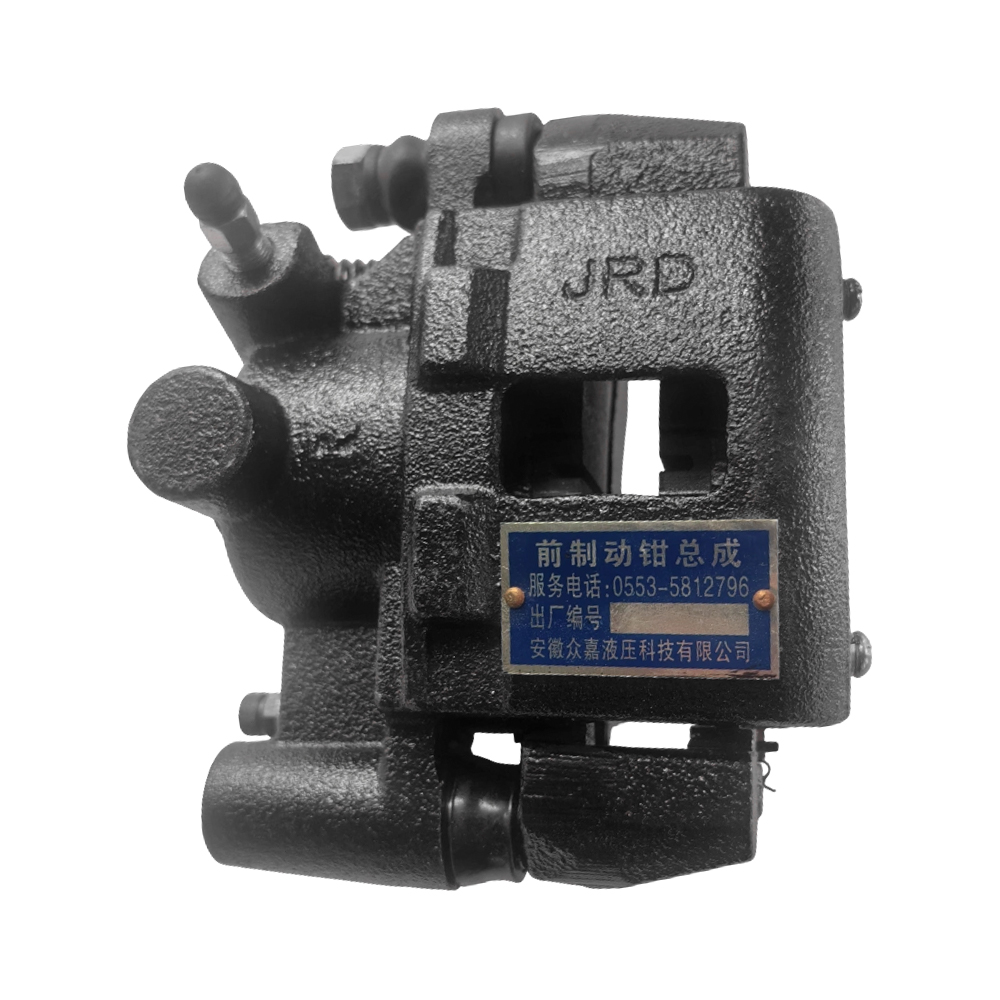
 Automotive Brake Caliper with Reliable Seals and Corrosion-Resistant PistonThis caliper uses compatible NBR or EPDM seals and a corrosion-resistant piston surface to maintain release characteristics over time, countering residual pressure that causes drag.View Product →
Prolonged residual pressure applies stress to the rubber seal lip. Over time, the seal takes a set and loses its ability to return the piston. This is where the material and the deployment environment matter: a caliper designed with a compatible NBR or EPDM seal and a corrosion-resistant piston surface will hold its release characteristics much longer.
On a floating caliper system, the caliper housing has to slide on the guide pins. When the guide pins lose lubrication, rust, or get contaminated, the housing sticks in its applied position even after the pressure drops.
The result is usually a one-sided pad wear pattern and a visible tilt between the caliper and the rotor. The exposed pin area is the most vulnerable. At each brake service, the pins should be pulled, cleaned, inspected for straightness, and coated with a silicone-based grease compatible with the rubber boot. A blind assembly technique that installs the pins without cleaning the through holes can create binding. This is especially visible on vehicles with high mileage and in dusty environments.
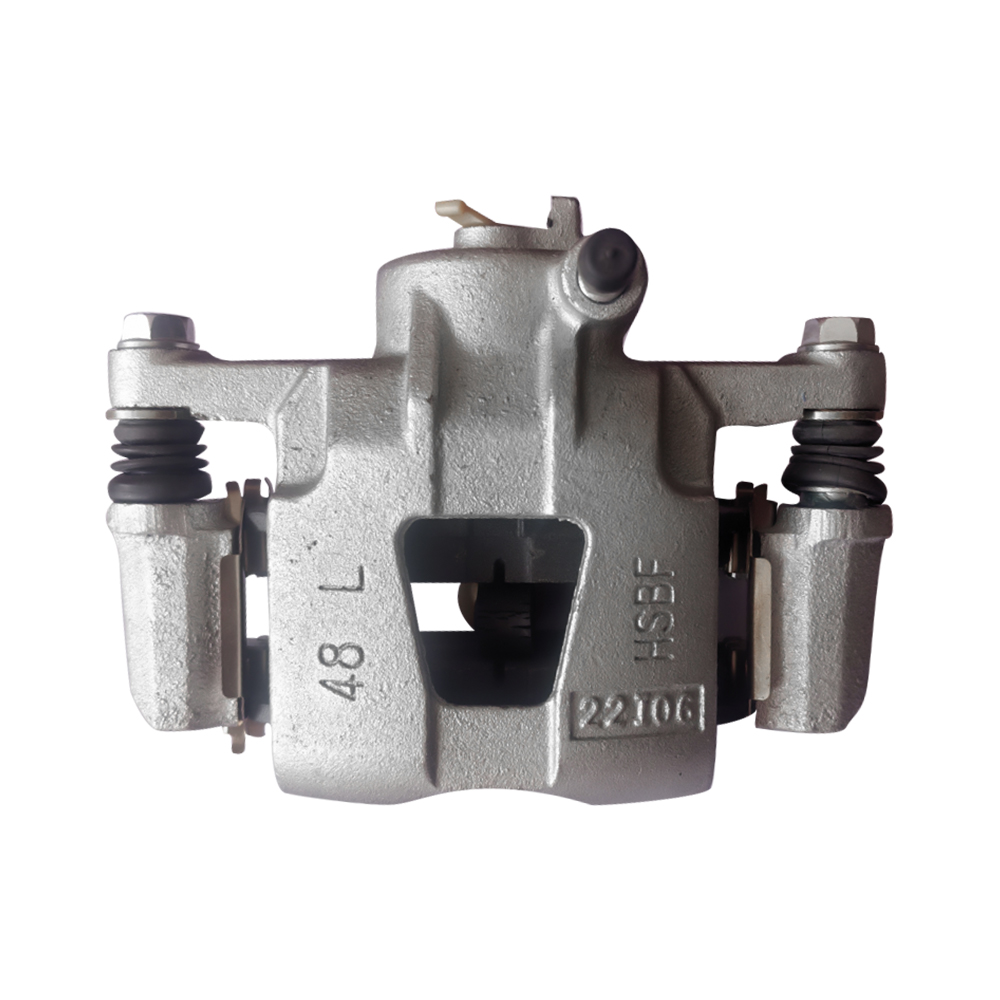
 Heavy-Duty Construction Machinery Brake Caliper for Harsh EnvironmentsEngineered for loaders and excavators, this caliper features reinforced pistons and wide pads, with multiple sealing protections to resist mud and dust, reducing sticking from contaminated guide pins.View Product →
No electronic diagnosis is needed for most sticking calipers. If you press the brake pedal firmly for a few seconds and then release it, the drag should disappear within seconds. If it does not, the problem is either residual hydraulic pressure or mechanical sticking. The field check is to crack the caliper bleeder. If the wheel frees up instantly, the cause is upstream hydraulic pressure; if not, the cause is inside the caliper assembly.
Diagnosis follows a logical sequence. Perform these steps from the simplest to the most involved, so you do not replace parts without evidence.
These percentages reflect common workshop data gathered from floating caliper systems over hundreds of brake repairs. The exact distribution varies with the vehicle type, service interval and working environment.
Long-term release reliability is determined in the design phase. The caliper body, the seal material, the piston coating and the guide pin geometry all contribute to how quickly the brake releases.
For automotive calipers, the priority is a stable seal that remains elastic at high working temperatures and a piston with a corrosion-resistant coating. In agricultural and construction machinery, the caliper also has to survive mud, dust, moisture and temperature extremes. A caliper with a larger diameter seal and a thicker surface treatment will keep its release stroke for a longer period.
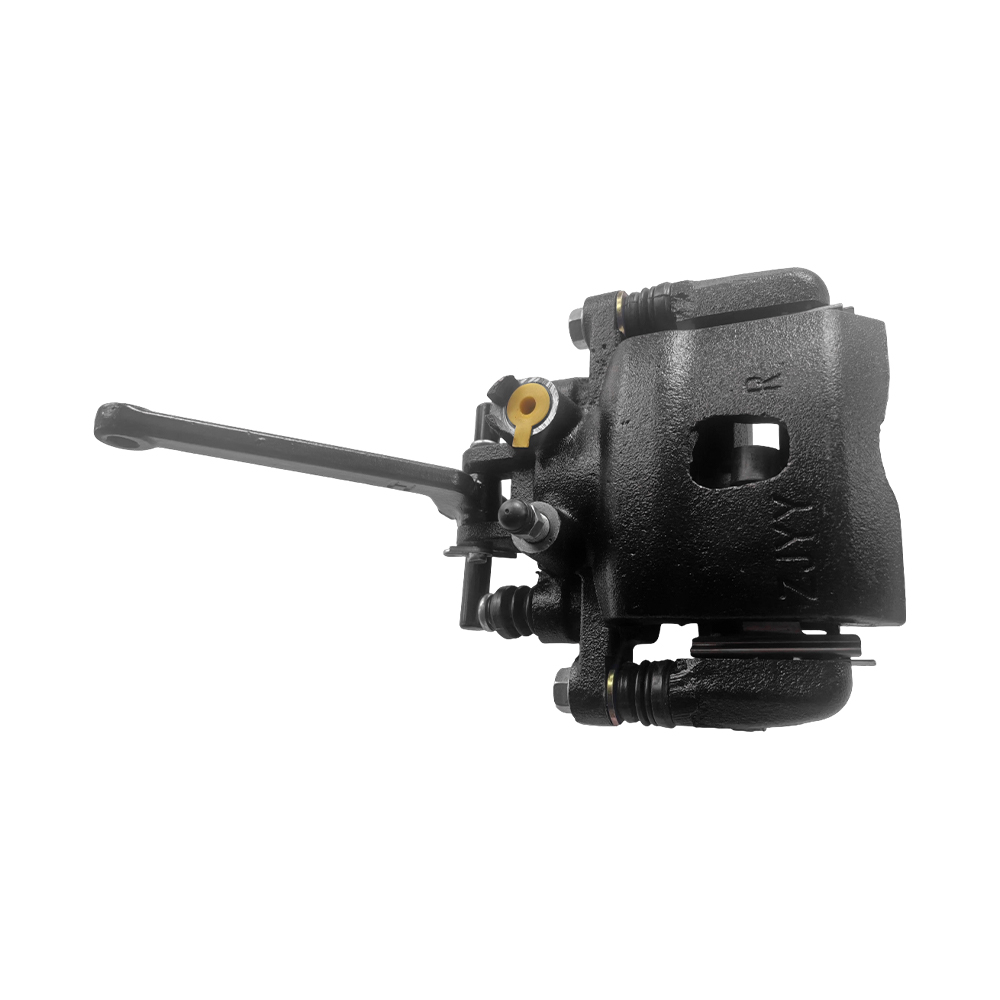
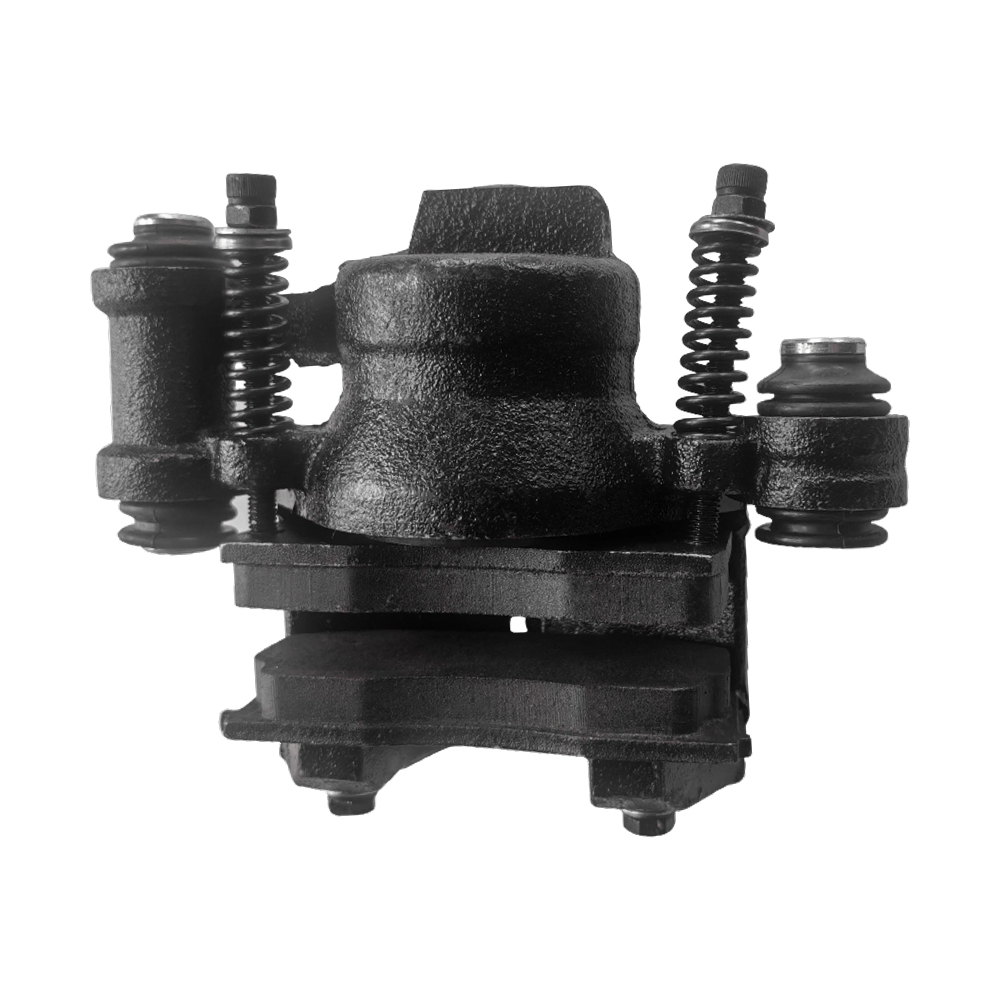 Combine Harvester Brake Caliper with Durable Seals and Alloy ConstructionBuilt from high-strength alloy cast iron with precision oil seals, this caliper withstands dust and moisture, ensuring reliable release and long service life in agricultural harvesting conditions.View Product →
For buyers, a complete engineering guide to agricultural machinery braking systems can help compare these durability attributes during procurement.
No. Many sticking calipers can be repaired with a new seal kit, a guide pin service and fresh lubricant. Replacement is required when the bore is deeply scored, the caliper body is warped, or the piston surface is damaged beyond recovery.
Yes. Brake hose liner collapse can act like a one-way valve, so pressure enters the caliper but cannot fully return. To confirm it, open the caliper bleeder after a long drive: if the wheel frees up, the caliper itself is fine and the hose needs to be replaced.
Both calipers on an axle should be built to the same specification. Even a small difference in release speed will change the brake torque distribution and produce a pull toward one side. Pair replacement also saves workshop time because one axle can be serviced together.
This generally points to a localized fault: a seized guide pin, a collapsed flexible hose on that wheel, or a piston bore score. Compare the two sides before replacing anything.

Contact Info.
+86-159 9623 5291
No. 5, Chuangye Road, Niandou Industrial Park, Ma'anshan City, Anhui Province, China
MOBILE QR CODE

 English
  Español