en

Need Help Now? Call Us!
+86-159 9623 5291

Our team proudly offers an on-time guarantee and a 100% customer satisfaction guarantee.
Contact Online


 Home / News / Industry News / Common Applications for Manual Directional Valves: A Comprehensive Technical Guide
  2026.08.24
  Industry News
 Content
In an era of increasing automation, the Manual Directional Valve remains an indispensable component across countless industries. These valves serve as the critical human-machine interface, enabling operators to directly and intuitively control the flow direction of hydraulic or pneumatic fluid. Understanding the common applications for manual directional valves is essential for engineers, maintenance personnel, and system designers seeking reliable and cost-effective control solutions. This article explores the diverse deployment of these valves, moving beyond theory to examine their practical, real-world uses in mobile and industrial settings.
One of the most prominent applications for a manual directional valve is in construction machinery. Equipment such as backhoe loaders, skid-steer loaders, and compact excavators rely on these valves to control functions like boom lift, bucket tilt, and auxiliary hydraulic services. The operator uses manual levers to precisely meter flow to cylinders, enabling smooth and controlled movements. The durability and tactile feedback of a Manual Directional Valve make it ideal for the harsh, high-vibration environments typical of construction sites.
The agricultural sector also heavily depends on manual directional valves. Tractors, combine harvesters, and sprayers utilize these valves to control implements such as front-end loaders, three-point hitches, and steering systems. In many cases, the human interface capability offered by a manual valve is preferred for tasks requiring fine, nuanced control, such as when positioning a bale or aligning a planter. The valve simplicity also allows for easier field repairs, a significant advantage in remote farming operations.
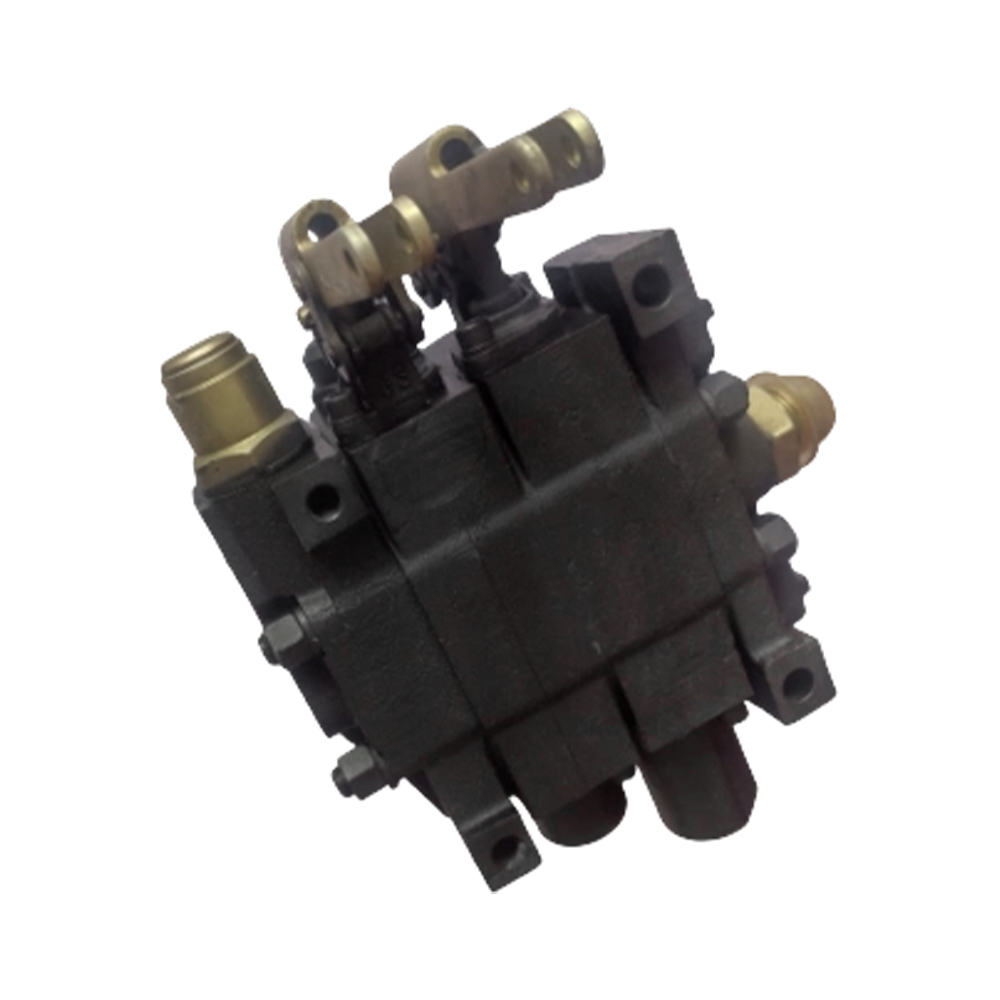
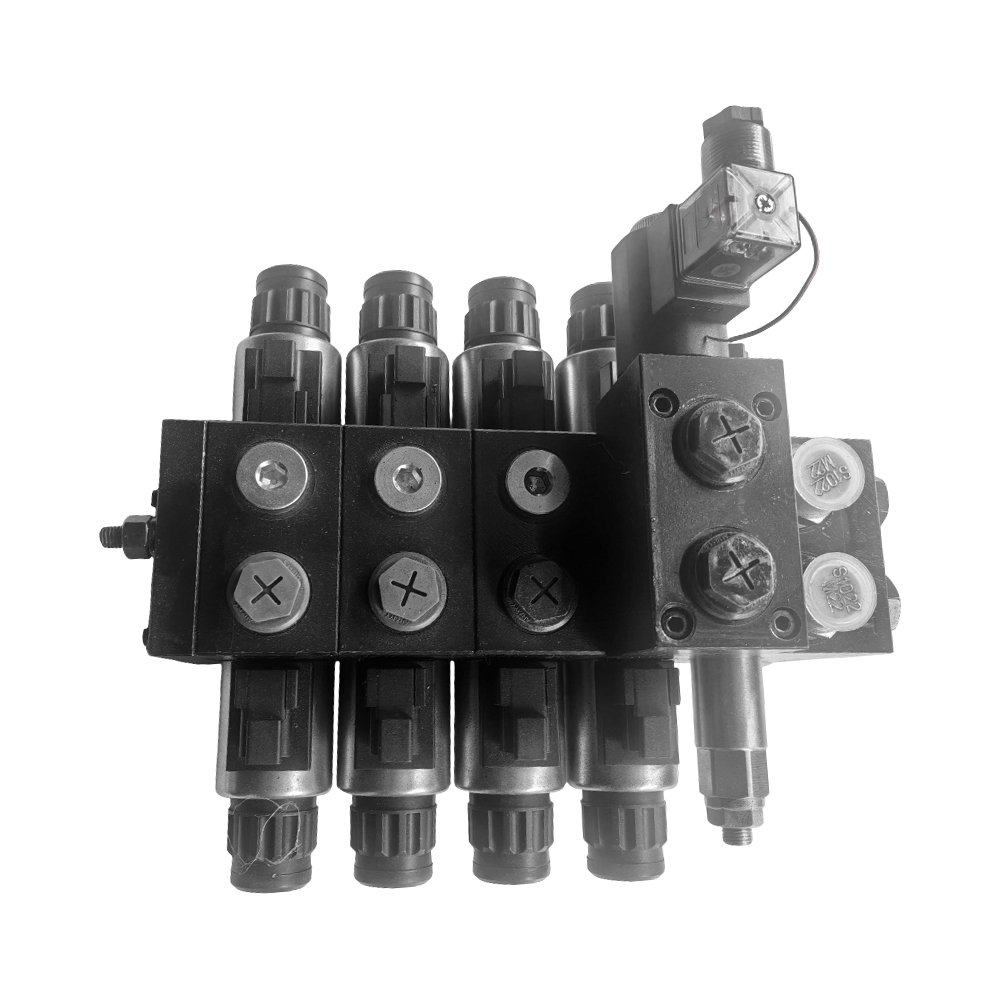
Forklifts and other material handling equipment commonly use manual directional valves in their hydraulic systems to control lifting, lowering, and tilting functions. The monoblock construction often used in these applications integrates multiple valve sections into a single casting, providing a compact and efficient solution for managing several functions simultaneously. These valves are critical for the precise and safe movement of heavy loads in warehouses and distribution centers.
Industry Insight: A survey of mobile equipment manufacturers reveals that manual directional valves remain the control method of choice for over 65 percent of new agricultural and construction machinery due to their low cost and proven reliability.
In stationary industrial settings, manual directional valves are extensively used in machine tools. They control the operation of double-acting cylinders for clamping, punching, shearing, and bending operations. By providing a direct mechanical link between the operator and the hydraulic circuit, these valves facilitate high repeatability and simple troubleshooting, making them a staple in workshops and manufacturing floors.
In the plastics industry, manual directional valves find specialized applications. For instance, they are used in nozzle cleaning procedures to quickly and completely vent drain lines. In these roles, valves often utilize brass housings and PTFE seals to minimize abrasion and resist chemical cleaning agents, demonstrating the versatility of the technology to meet specific environmental demands.
The oilfield equipment sector relies on robust manual directional valves for controlling various functions in drilling and well-servicing operations. These valves are selected for their ability to handle high pressures, often up to 3000 PSI, and their compatibility with various hydraulic oils and fluids. Their simple operation in potentially hazardous environments reduces the risk of electronic failure.
| Application Sector | Typical Equipment | Primary Function |
|---|---|---|
| Construction | Excavators, Loaders | Boom, Bucket, and Arm Control |
| Agriculture | Tractors, Combine Harvesters | Implement Lift and Steering |
| Material Handling | Forklifts, Stackers | Lift, Tilt, and Reach Functions |
| Manufacturing | Presses, Machine Tools | Clamping, Punching, Feeding |
| Energy | Wind Turbines, Oil Rigs | Pitch Control, Valve Control |
Manual directional valves are frequently used in pilot circuits to control larger, pilot-operated directional control valves. In this configuration, the manual valve provides a low-flow signal that shifts the main spool of a larger valve. This setup allows for remote control of high-flow systems. Furthermore, they serve as indispensable manual overrides for safety and emergency backup. When an electrically controlled system fails, a Manual Directional Valve can be used to bypass the automation, allowing essential functions to continue in a limp-home mode.
While full automation is the goal, manual directional valves retain a critical role during setup and maintenance of robotic cells. For example, in a pick-and-place cell, a manually operated 3/2 directional valve controls vacuum generation. During setup or part changeovers, the operator uses a lever to manually switch off inlet air, allowing safe workpiece changes without requiring the robot to power down or be reprogrammed.
In many industrial environments, a manual directional valve is a key component of a safety system. They are used to quickly dump hydraulic pressure or switch flow to a safe state in the event of an emergency. The tactile and direct nature of manual operation provides a sense of security and control that can be crucial in high-risk situations.
The selection of a manual directional valve often depends on the required control mechanism. Common options include spring-return for momentary operation and detented for maintaining a shifted position. Some advanced models, like those with a Twist/Lock mechanism, offer dual operation, allowing both momentary and detented actuation. The choice between these directly impacts the valve application suitability; for instance, a spring-return valve is often used for inching control, while a detented valve is preferred for continuous operation like powering a hydraulic motor.
Common applications for manual directional valves are diverse, but each is governed by specific technical parameters. For example, a standard manually operated spool valve might be capable of flows up to 7.5 liters per minute and pressures as high as 240 bar for light-duty applications. In contrast, larger mobile applications require valves capable of flows up to 40 gallons per minute at 5000 psi. A key design consideration is the valve center condition, which determines the pump state when the valve is in neutral.
When considering applications, it is important to note that manual directional valves, particularly those used in intermittent manual override functions, often have a defined mechanical life. Datasheets for specific cartridges indicate a mechanical life expectancy of approximately 7000 cycles. This highlights the importance of selecting the right duty cycle for the intended application.
The most common application is in mobile machinery such as construction equipment like loaders and excavators and agricultural tractors, where they are used to control hydraulic cylinders and motors. They also see extensive use as manual overrides in industrial circuits.
Manual valves are preferred for their simplicity, lower cost, ease of troubleshooting, and the tactile feedback they provide. They are also more reliable in harsh environments without electricity and serve as a critical backup for safety and emergency situations.
Choosing the right valve involves defining the required number of ways and positions, selecting the appropriate spool type and center condition, and ensuring the valve flow and pressure ratings match the system requirements.
The heaviest users include the construction, agriculture, material handling, manufacturing, and oil and gas industries. These sectors value the reliability and direct control manual valves offer in their heavy-duty equipment.
Yes, manual directional valves are frequently used as safety devices to dump pressure or redirect flow during emergencies. They also serve as manual overrides to bypass automated controls in case of a system failure, ensuring a level of fail-safe operation.
Absolutely. Many manual valves are designed for high-pressure applications, with common ratings of 350 bar and some capable of handling even higher pressures, making them suitable for demanding hydraulic systems.
Recommended Products

Contact Info.
+86-159 9623 5291
No. 5, Chuangye Road, Niandou Industrial Park, Ma'anshan City, Anhui Province, China
MOBILE QR CODE

 English
  Español