en

Need Help Now? Call Us!
+86-159 9623 5291

Our team proudly offers an on-time guarantee and a 100% customer satisfaction guarantee.
Contact Online


 2026.08.10
  Industry News
 Content
The ability to safely and predictably slow a vehicle is fundamental to modern transportation. While the basic principle remains the conversion of kinetic energy into heat through friction, the technology governing an Automotive Braking System has evolved into a complex interplay of hydraulics, electronics, and materials science.
At its core, every braking system relies on a fundamental law of physics. A moving vehicle possesses kinetic energy, which is the energy of motion. To stop the vehicle, this energy must be transferred or converted. The braking system achieves this by creating friction between a stationary component and a moving component. This friction transforms the kinetic energy into thermal energy (heat). The vehicle slows down and eventually stops because the rotating wheels are no longer allowed to spin freely.
This process is a balance of three key principles: leverage, hydraulics, and friction. Leverage and hydraulics work together to multiply the relatively small force applied by a driver's foot on the pedal into the immense force required to clamp onto a spinning rotor. Friction is the final element that converts motion into heat, bringing the vehicle to a halt.
Key fact A typical passenger car at 60 mph carries about 1.5 million joules of kinetic energy — equivalent to the energy needed to lift a small car 30 meters high. The braking system must dissipate all of that energy as heat in a matter of seconds.
The force exerted on the brake pedal is far too weak to stop a car on its own. This is where the hydraulic system comes into play. When you press the brake pedal, a pushrod forces a piston into the master cylinder, which is filled with brake fluid. Because brake fluid is incompressible, the hydraulic pressure is transmitted instantly and equally through the brake lines to the calipers at each wheel.
This setup provides a significant mechanical advantage. The system uses differences in piston size to multiply the input force. A small force applied to the master cylinder piston generates a much larger force at the caliper pistons. This hydraulic force multiplication is the reason a driver can stop a vehicle weighing thousands of pounds with a single foot.
The master cylinder is a critical component. It converts non-hydraulic mechanical force from the brake pedal into hydraulic pressure that can be distributed to the wheels. The brake fluid itself is not simply a lubricant; it is the medium through which force is transmitted. Its chemical stability and resistance to high temperatures are critical for consistent performance.
The hydraulic system comprises several vital parts, including the master cylinder, which generates the hydraulic pressure; the brake fluid and its reservoir; and the network of hoses and steel lines that connect the master cylinder to the calipers or wheel cylinders.
The hydraulic pressure ultimately actuates the friction components at the wheels. The two primary types of friction brakes are disc brakes and drum brakes. Friction, the resistance to movement between two surfaces, is generated when a static component is applied to a moving one, converting the vehicle's kinetic energy into heat.
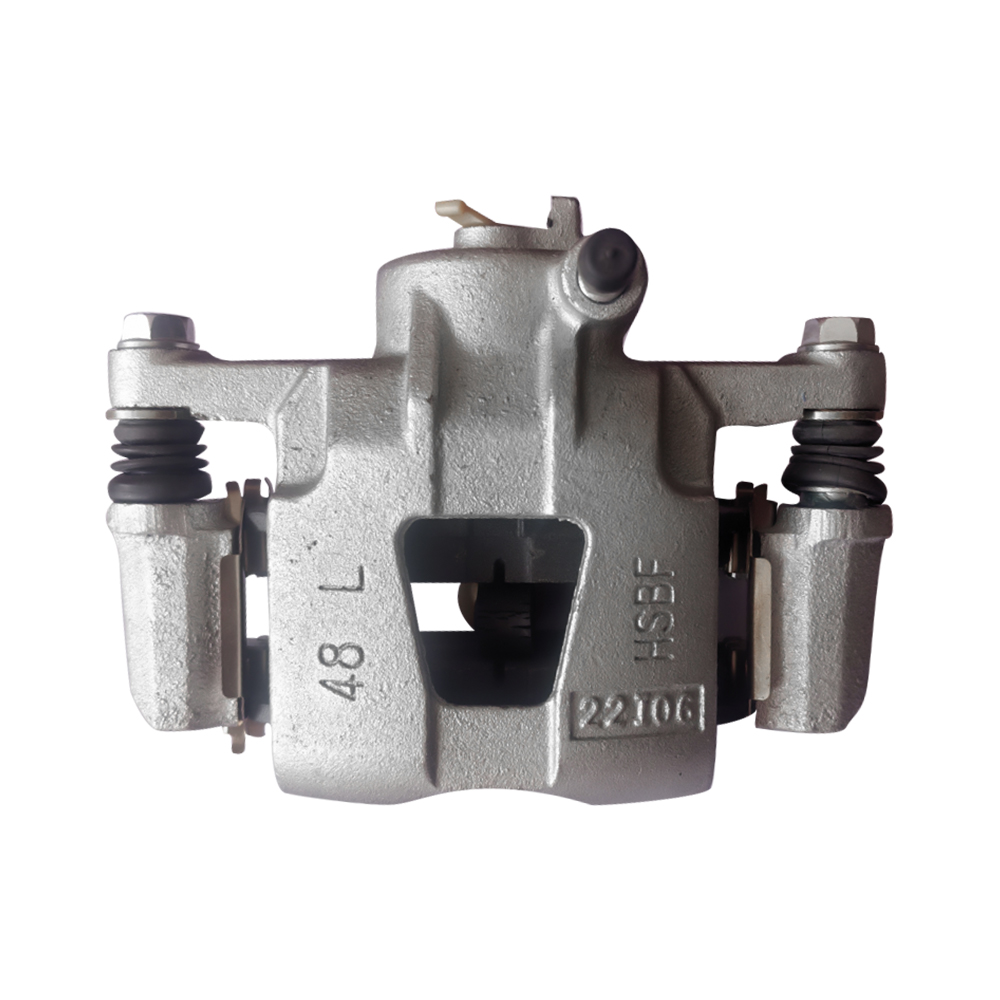
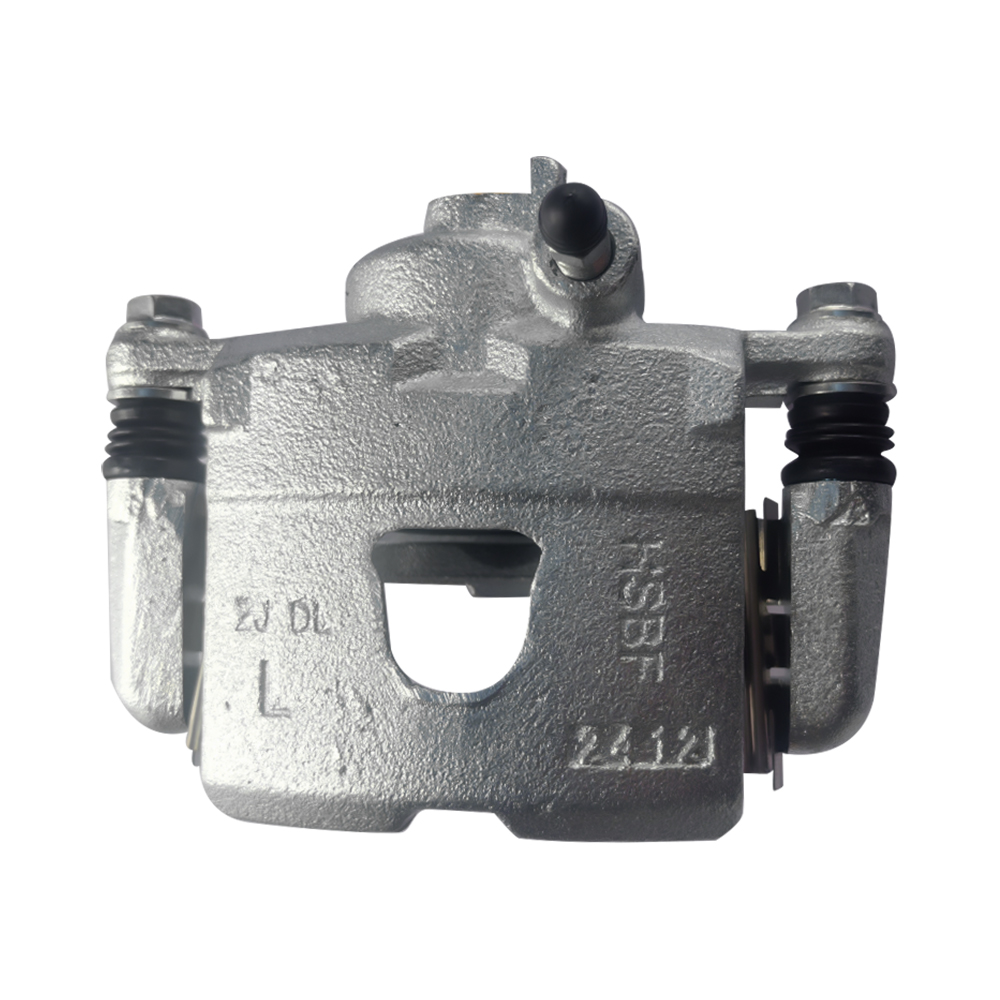
Disc brakes are the predominant system used on the front axles of modern passenger vehicles and are increasingly common on all four wheels. They consist of a brake rotor (or disc) that is mounted to the wheel hub and rotates with the wheel. A caliper, fixed to the suspension, straddles the rotor. When hydraulic pressure is applied, it forces pistons in the caliper to push brake pads against both sides of the spinning rotor. This clamping action creates the friction needed to slow the wheel's rotation.
While less common on front wheels, drum brakes are still frequently found on rear axles, especially in more affordable or heavier vehicles. In this design, a brake drum rotates with the wheel, and a pair of curved brake shoes sit inside it. When hydraulic pressure is applied, a wheel cylinder pushes the shoes outward against the inner surface of the rotating drum. The friction between the shoe linings and the drum slows the vehicle. Drum brakes can often provide more braking force for a given diameter, but they are more susceptible to heat buildup, which can cause brake fade.
Understanding the differences between disc and drum brakes is crucial for appreciating their distinct applications and characteristics.
| Feature | Disc Brakes | Drum Brakes |
|---|---|---|
| Primary Application | Front wheels, high‑performance vehicles | Rear wheels, budget‑friendly vehicles |
| Heat Dissipation | Superior; open to airflow | Inferior; prone to brake fade |
| Stopping Power | Excellent at high speeds | Good, but weaker under sustained heavy braking |
| Maintenance | Easier; pads are self‑adjusting | More complex; requires manual adjustment |
| Cost | Generally more expensive | More cost‑effective to manufacture |
| Fade Resistance | High; less likely to lose effectiveness when hot | Lower; performance degrades with excessive heat |
Modern braking is not just a purely mechanical or hydraulic affair. Electronic systems have become integral to safety and performance, adding layers of intelligence that go beyond simply clamping a pad onto a rotor.
The Anti‑lock Braking System (ABS) is a crucial safety feature that prevents the wheels from locking up during heavy braking. When a wheel locks, it can lose traction with the road, often resulting in an uncontrollable skid. ABS uses wheel‑speed sensors to detect when a wheel is about to stop rotating. The system then rapidly modulates the brake fluid pressure—releasing and reapplying it hundreds of times per second—to keep the wheel on the verge of locking. This allows the driver to maintain steering control and often results in a shorter stopping distance.
Electronic Brakeforce Distribution (EBD) works in conjunction with ABS to optimize braking force distribution between the front and rear axles. Under heavy braking, weight shifts forward, reducing the load on the rear wheels. If the rear brakes were to apply the same force as the front, they could lock up. EBD uses the vehicle's stability control sensors to manage the hydraulic pressure to the rear wheels, ensuring optimal braking performance and stability under varying loads and conditions.
In a conventional system, hydraulic pressure is generated by the driver's foot. Brake‑by‑wire systems, however, are a paradigm shift. In a "dry" brake‑by‑wire system, the brake signal is transmitted entirely electrically from the pedal to an electronic control unit. Electric motors located directly at the wheels then generate the clamping force on the pads, eliminating the need for brake fluid and hydraulic lines.
Advantages of brake‑by‑wire: enhanced responsiveness, true zero drag (reduces energy loss), seamless integration with automated driving and regenerative braking, and lower maintenance complexity.
Regenerative braking represents another significant technological shift, particularly for hybrid and electric vehicles. Instead of simply converting all of the vehicle's kinetic energy into waste heat, a regenerative system captures a portion of it. During deceleration, the electric motor that drives the wheels is operated in reverse as a generator. This converts the vehicle's kinetic energy back into electrical energy, which is then used to recharge the battery pack.
This process provides two primary benefits: increased efficiency (extending the driving range) and reduced wear on friction brakes, which extends the life of traditional brake pads and rotors. However, regenerative braking alone often cannot provide the full stopping force required, especially in an emergency. In such situations, the traditional hydraulic friction brakes seamlessly take over to ensure the vehicle stops in a safe and controlled manner. The blending of these two systems is managed by sophisticated software to ensure a consistent pedal feel and predictable deceleration.
An automotive braking system is the network of components and sub‑systems designed to slow down, stop, or hold a vehicle in place. It works by converting the vehicle's kinetic energy into heat energy through friction, typically using a combination of hydraulic, mechanical, and electronic systems for control and safety.
Brake pedal pulsation is often a sign that the brake rotors have become warped or have developed an uneven surface. This is often caused by excessive heat buildup or improper wheel tightening. The "pulsing" you feel is the brake pad following the uneven surface of the rotor during braking.
Disc brakes work by using hydraulic pressure to clamp a stationary brake pad against a rotating brake rotor. When the brake pedal is pressed, a piston in the caliper pushes the brake pads against the rotor. The friction created between the two surfaces slows the rotor's rotation, and with it, the wheel to which it is attached.
Disc brakes use a caliper to squeeze pads against a rotating disc or rotor. They are known for better heat dissipation and fade resistance. Drum brakes use brake shoes that push outward against the inner surface of a rotating drum. They are less expensive to manufacture but are more susceptible to heat buildup and fade, which is why they are typically used on the rear axle of many vehicles.
Anti‑lock Braking System (ABS) is an electronic safety system that prevents the wheels from locking up during heavy braking. It uses sensors to detect when a wheel is about to lock and then quickly modulates the brake pressure—releasing and reapplying it many times per second. This helps maintain traction and allows the driver to retain steering control.
Recommended Products

Contact Info.
+86-159 9623 5291
No. 5, Chuangye Road, Niandou Industrial Park, Ma'anshan City, Anhui Province, China
MOBILE QR CODE

 English
  Español