en

Need Help Now? Call Us!
+86-159 9623 5291

Our team proudly offers an on-time guarantee and a 100% customer satisfaction guarantee.
Contact Online


 Home / News / Industry News / Electromagnetic multi-way valve quality evaluation criteria and precautions
  2025.05.28
  Industry News
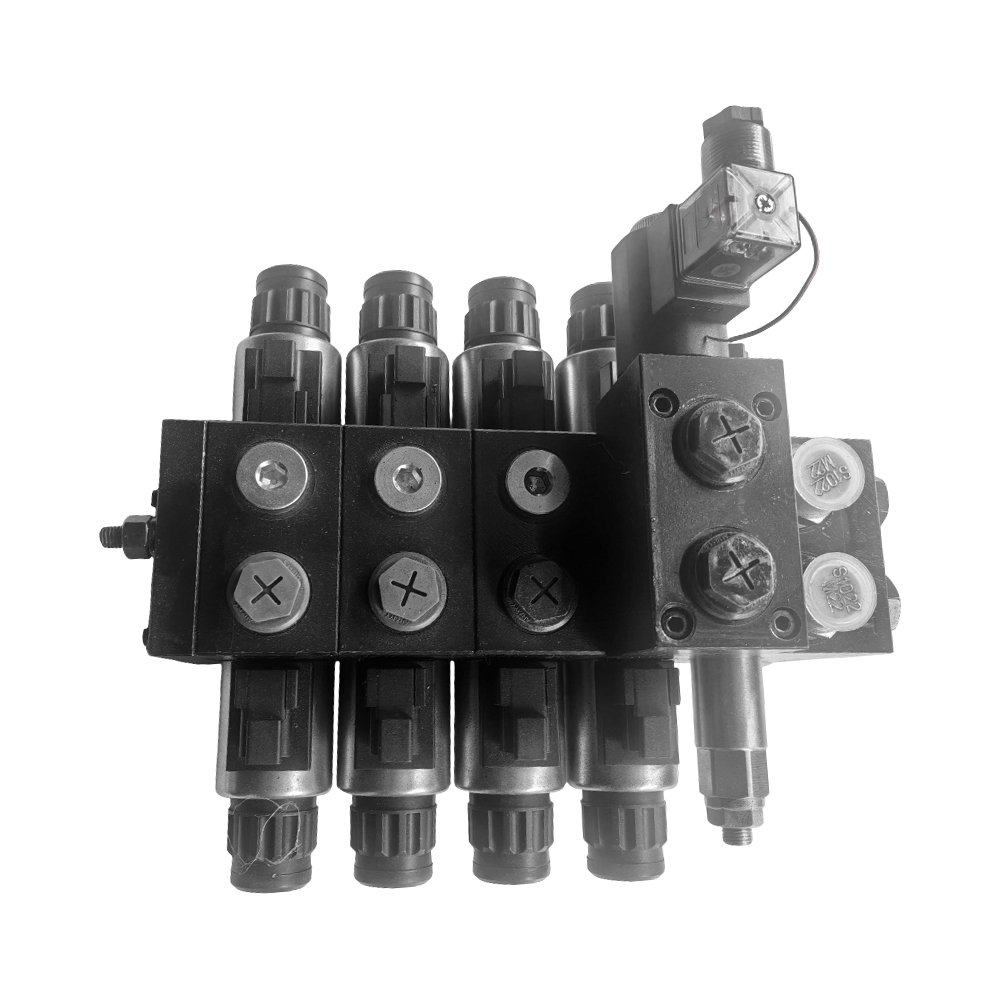
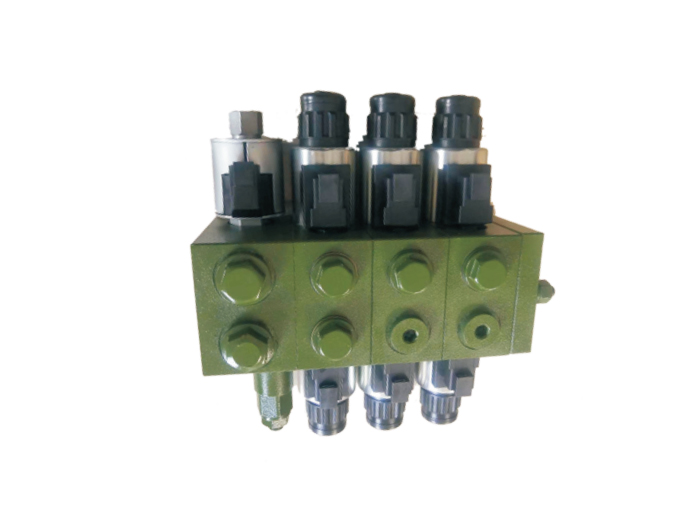
 The quality of an electromagnetic multi-way valve directly determines the reliability, response speed, and service life of a hydraulic system. Its quality assessment requires comprehensive consideration from multiple dimensions, including materials and manufacturing processes, performance indicators, durability, stability, and compatibility. The following are key quality evaluation criteria and precautions:
I. Core Quality Indicators
1. Materials and Manufacturing Process
Valve Body Material:
Multi-way valves use ductile iron (QT500-7) or aluminum alloy (aerospace grade 6061-T6), offering high strength and deformation resistance.
Valve core material requires high-frequency quenching hardening (e.g., 20CrMnTi carburizing treatment), with a surface hardness ≥ HRC60 and excellent wear resistance.
Sealing Technology:
Dynamic seals (e.g., valve core) commonly use a combination of polytetrafluoroethylene (PTFE) and a metal support ring. Static seals preferably use fluororubber (FKM), resistant to high temperatures (-20℃~200℃) and chemical corrosion.
2. Performance Parameters
Pressure Rating:
Industrial-grade valves typically have a pressure rating of 21~35MPa, while valves for construction machinery require up to 42MPa (e.g., excavator multi-way valves).
Burst pressure must be ≥ 1.5 times the rated pressure.
Flow Matching:
The valve diameter selection must meet the system flow rate (e.g., DN10 valve corresponds to 50L/min), pressure drop ≤ 0.3MPa@rated flow rate.
Response Time:
Solenoid valve switching time ≤ 0.1s (high-frequency valves can reach 0.02s), proportional valve step response ≤ 50ms.
3. Durability Testing
Life Cycle:
Valve switching cycles ≥ 1 million cycles (test standard ISO 6403), no leakage or performance degradation.
Contamination Resistance:
Valve core clearance ≤ 5μm, capable of long-term operation in NAS 1638 Class 9 oil (ordinary valves require Class 10).
II. Key Quality Verification Methods
1. Factory Inspection Items
Sealing Test:
1.5 times rated pressure for 5 minutes, leakage ≤ 0.1mL/min (ISO 4406).
**Reversing Reliability:**
Tested 5000 reversing cycles each at 85℃ and -40℃ without jamming.
**Load Shock Test:**
Simulated instantaneous pressure shock (e.g., 110% rated pressure) showed no cracks or deformation in the valve body.
**2. Third-Party Certifications:**
**Industry Standards:**
ISO 4400 (Hydraulic Valve Contamination Sensitivity), DIN 24340 (Performance Testing).
**Safety Certifications:**
CE (EU), GOST (Russia), GB/T 7935 (China).
III. Quality Comparison of Valves at Different Grades
**Indicators:** Low-end Valve | Mid-range Valve
**Valve Body Material:** Ordinary HT250 Cast Iron | QT500-7 Ductile Iron | Aluminum Alloy + Ceramic Coating
**Valve Core Accuracy:** Radial Clearance 8~10μm | 5~8μm | ≤3μm (Mirror Polishing)
**Response Time:** 0.15~0.3s | 0.08~0.15s | ≤0.05s (With Position Feedback)
**Lifespan:** 300,000~500,000 cycles | 800,000~1,000,000 cycles | Over 2,000,000 cycles
**Price Reference:** ¥500~2000 | ¥2000~8000 | ¥10,000~50,000
IV. Common Quality Problems and Mitigation Measures
**Valve Core Sticking:**
**Causes:** Oil contamination (particulate matter > 10μm), assembly burrs not removed.
**Solutions:** Flushing the system before installation; selecting valves with built-in filters.
Electromagnetic coil burnout
Cause: Unstable voltage, overheating from continuous energization (duty cycle > 60%, continuous energization type required).
Solution: Install a voltage regulator, select a **H-class insulation (180℃)** coil.
Internal leakage exceeding standards
Cause: Valve core wear or seal aging.
Solution: Regularly check oil cleanliness, replace with wear-resistant valve cores (e.g., hard chrome plated).
V. Purchase Recommendations
Matching operating conditions:
For construction machinery, choose vibration-resistant valves (e.g., with anti-loosening bolts); for metallurgical equipment, choose high-temperature resistant valves.
Brand and service:
Prioritize suppliers that provide performance curves and failure analysis reports.
Cost trade-offs:
For long-term continuous operation scenarios (e.g., production lines), superior valves are recommended; for intermittent use, mid-range valves are acceptable.
Tip: For critical systems, request the manufacturer to provide MTBF (Mean Time Between Failures) data (valve typically > 100,000 hours). If the budget is limited, at least ensure that the main valve core and solenoid pilot valve are brand-name parts, and the other auxiliary valves can be downgraded.
Recommended Products

Contact Info.
+86-159 9623 5291
No. 5, Chuangye Road, Niandou Industrial Park, Ma'anshan City, Anhui Province, China
MOBILE QR CODE

 English
  Español