en

Need Help Now? Call Us!
+86-159 9623 5291

Our team proudly offers an on-time guarantee and a 100% customer satisfaction guarantee.
Contact Online


 Home / News / Company News / Analysis of the Application of Automotive Hydraulic Technology in Industry
  2025.08.04
  Company News
 Hydraulic technology plays a crucial role in the automotive manufacturing and related industries due to its high power density, precise control, and reliability.
Hydraulic technology plays a crucial role in the automotive manufacturing and related industries due to its high power density, precise control, and reliability. The following analysis focuses on four dimensions: application scenarios, technological advantages, typical cases, and future trends.
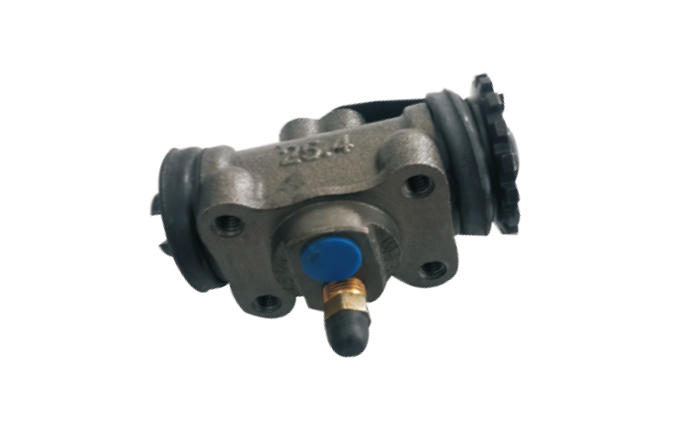
I. Core Application Areas of Automotive Hydraulic Technology
1. Automotive Manufacturing Production Lines
Hydraulic systems in automotive factories are mainly used in high-load, high-precision processes:
Stamping:
Servo hydraulic presses (pressure 2000~5000 tons) achieve mold positioning accuracy of 0.1mm.
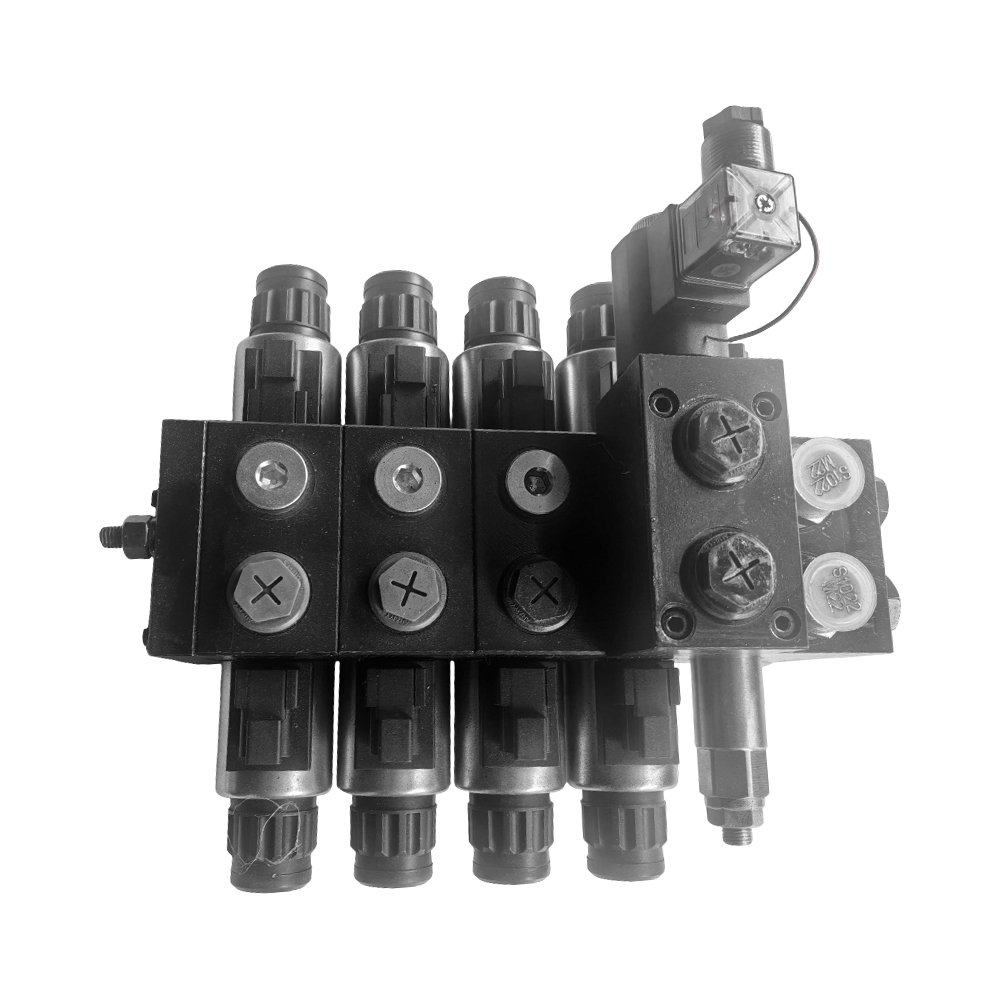
Case Study: A car manufacturer used proportional multi-way valves to control hydraulic cushions, increasing the sheet metal forming pass rate to 99.5%.
Welding and Assembly:
Hydraulic fixtures provide rapid clamping (response time ≤ 0.2 seconds), adapting to flexible production of multiple vehicle models.
Electro-hydraulic hybrid drive (EHA) reduces energy consumption by 30%.
2. Automotive Testing and Experimentation Equipment
Brake/Suspension Test Bench:
Hydraulic servo system simulates complex road patterns (frequency 0~50Hz), accuracy ±1%.
Collapse Test:
Hydraulic ejection device achieves acceleration from 0~80km/h (error <0.5km/h).
3. Special Applications of New Energy Vehicles
Battery Pack Press-fitting:
Hydraulic system provides constant press-fitting force (±5N control) to avoid cell damage.
Hydrogen Fuel Cell Dual Plate Stamping:
High-pressure hydraulics (100MPa+) achieves micron-level flow channel forming.
II. Industrial Extension Applications of Automotive Hydraulic Technology
Automotive hydraulic technology, through modular and intelligent upgrades, has been applied to other industrial fields:
1. Construction Machinery
Electro-hydraulic Hybrid Excavator:
Recovers braking energy to the hydraulic accumulator, reducing fuel consumption by 25%.
Intelligent Lifting Equipment:
Automotive-derived proportional valve technology achieves millimeter-level micro-motion of the boom.
2. Aerospace
Aircraft Hydraulic Actuator:
Utilizes automotive high-pressure gear pump technology (35MPa), resulting in a 40% weight reduction.
Rocket Fueling System:
Explosion-proof hydraulic valves are derived from automotive CNG high-pressure pipeline technology.
3. Intelligent Logistics
AGV Hydraulic Lifting Platform:
Modified automotive steering hydraulic system, with a load capacity of 2 tons and a positioning accuracy of ±3mm.
III. Technical Advantages Analysis
Advantages: Automotive hydraulic technology vs. Traditional industrial hydraulic technology
Response Speed: ≤0.1 seconds (servo valve control) vs. 0.3~1 seconds (mechanical valve)
Energy Efficiency: Electric hydraulic pump (efficiency > 85%) vs. Fixed displacement pump (efficiency 60%~70%)
Integration: Integrated valve block with CAN bus communication vs. distributed pipeline connection
Cost Control: Mass production reduces unit price by 30%+ vs. high cost for customized design
IV. Typical Case Analysis
Case 1: Upgrade of Hydraulic System for Automotive Factory Stamping Line
Problem: Traditional hydraulic presses have high energy consumption and noise.
Solution:
Use a variable displacement pump + accumulator to achieve on-demand oil supply.
Upgrade to a proportional multi-way valve, reducing pressure fluctuation from ±2MPa to ±0.3MPa.
Results: Energy consumption reduced by 40%, stamping cycle time increased by 15%.
Case Study 2: New Energy Battery Module Press-fit Equipment
Challenge: Electrode pressing requires constant force and overload protection.
Innovation Points:
Automotive brake hydraulic system modification, force control accuracy ±1N.
Adding closed-loop feedback from pressure sensors.
Results: Yield increased from 92% to 98%.
V. Future Development Trends
Electro-hydraulic Fusion (EHA):
Integrated design of motor, pump, and valve (e.g., Bosch CytroPac), reducing size by 50%.
Digital Twin Operation and Maintenance:
Predicting faults through real-time hydraulic system data (e.g., valve core wear warning).
Green Hydraulics:
Biodegradable hydraulic oil (HETG) compatible with existing sealing materials.
VI. Challenges and Countermeasures
Challenges Countermeasures
High-precision control requirements: Adopt automotive-grade servo valves (0.1% resolution)
High energy consumption: Variable frequency motor + intelligent unloading algorithm
Insufficient cross-industry adaptability: Modular design (e.g., universal interface for cartridge valves)
Conclusion
Automotive hydraulic technology, with its high reliability, rapid iteration capabilities, and economies of scale, is continuously penetrating the industrial field. In the future, with the development of electro-hydraulic integration and intelligence, its application boundaries will further expand, becoming an "invisible pillar" of luxury equipment manufacturing.
Recommended Products

Contact Info.
+86-159 9623 5291
No. 5, Chuangye Road, Niandou Industrial Park, Ma'anshan City, Anhui Province, China
MOBILE QR CODE

 English
  Español