en

Need Help Now? Call Us!
+86-159 9623 5291

Our team proudly offers an on-time guarantee and a 100% customer satisfaction guarantee.
Contact Online


 Home / News / Industry News / Mechanical Engineering Analysis of Static Holding Torque in Specialized Brake for Corn and Wheat Harvesting Machinery
  2026.05.24
  Industry News
 Content
1. The ability of a Specialized Brake for Corn and Wheat Harvesting Machinery to maintain stability on a 15% gradient depends on the precise calculation of static holding torque, which must exceed the gravitational rolling force of a fully loaded harvester.
2. When evaluating how specialized brakes maintain torque on steep gradients, engineers focus on the friction material's shear strength and its ability to resist sliding under the high-mass loads typical of corn and wheat collection.
3. A Specialized Brake for Corn and Wheat Harvesting Machinery utilizes semi-metallic or sintered friction pads to ensure the static friction coefficient remains stable even when the brake disc temperature exceeds 200 degrees Celsius after a long haul.
4. The impact of high-mass loads on harvester braking distance is mitigated by the integrated park-lock mechanism, which provides a secondary mechanical redundancy to the primary hydraulic clamping force.
1. Why dust-proof sealing is critical for harvesting brakes: Harvesting operations generate massive amounts of organic chaff and dust; if these particulates infiltrate the friction interface, they act as lubricants, causing a catastrophic drop in holding torque.
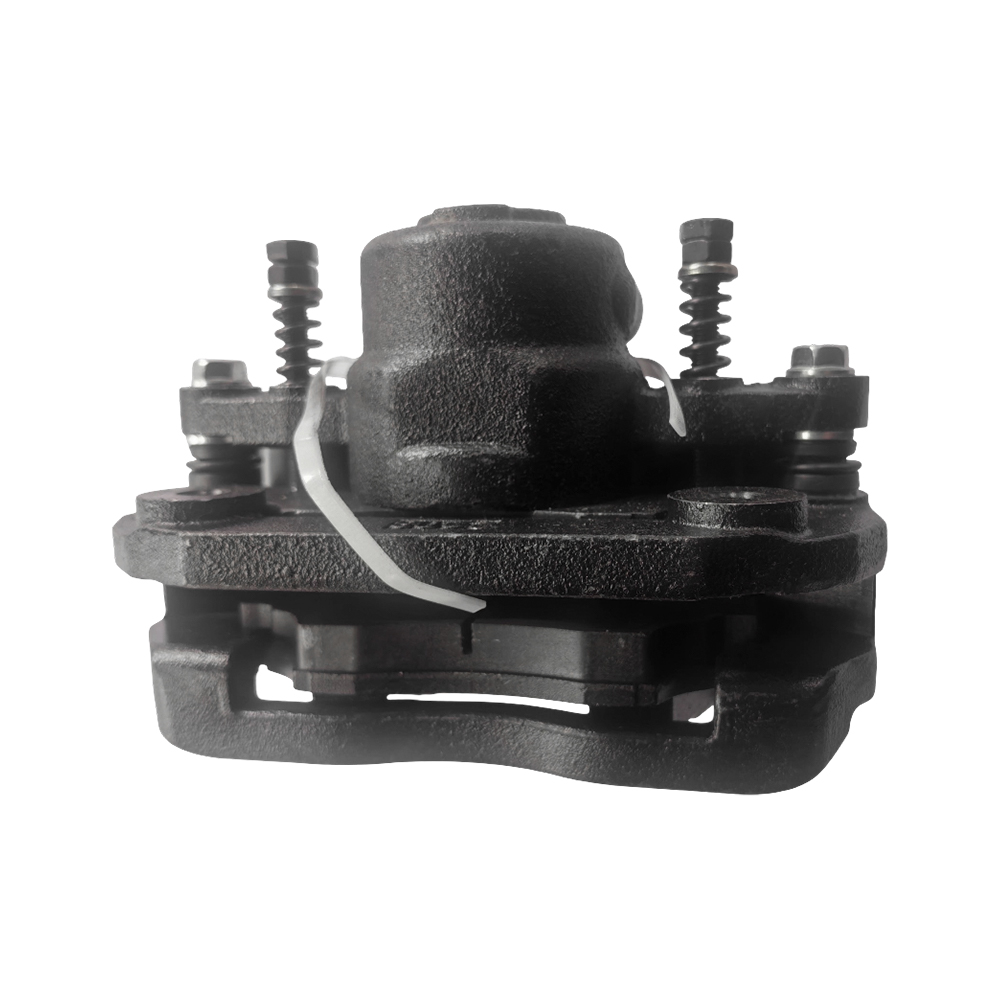
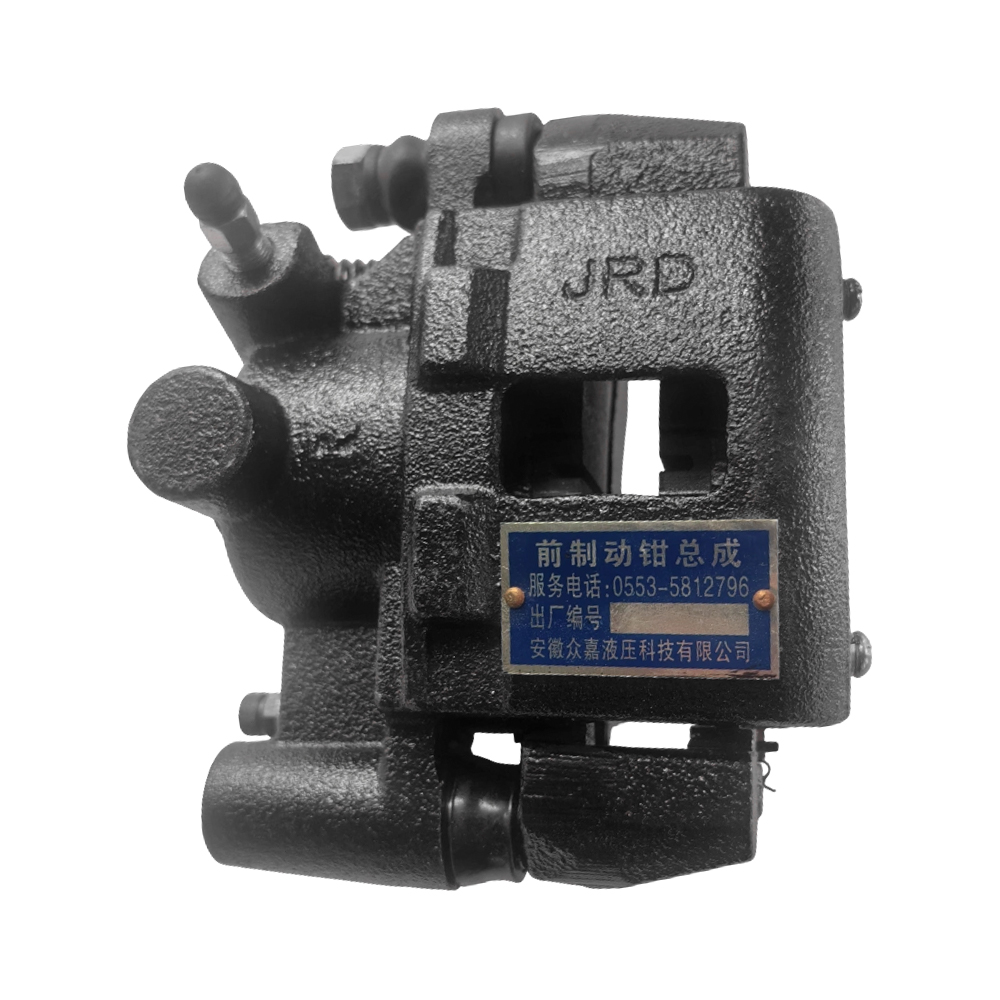
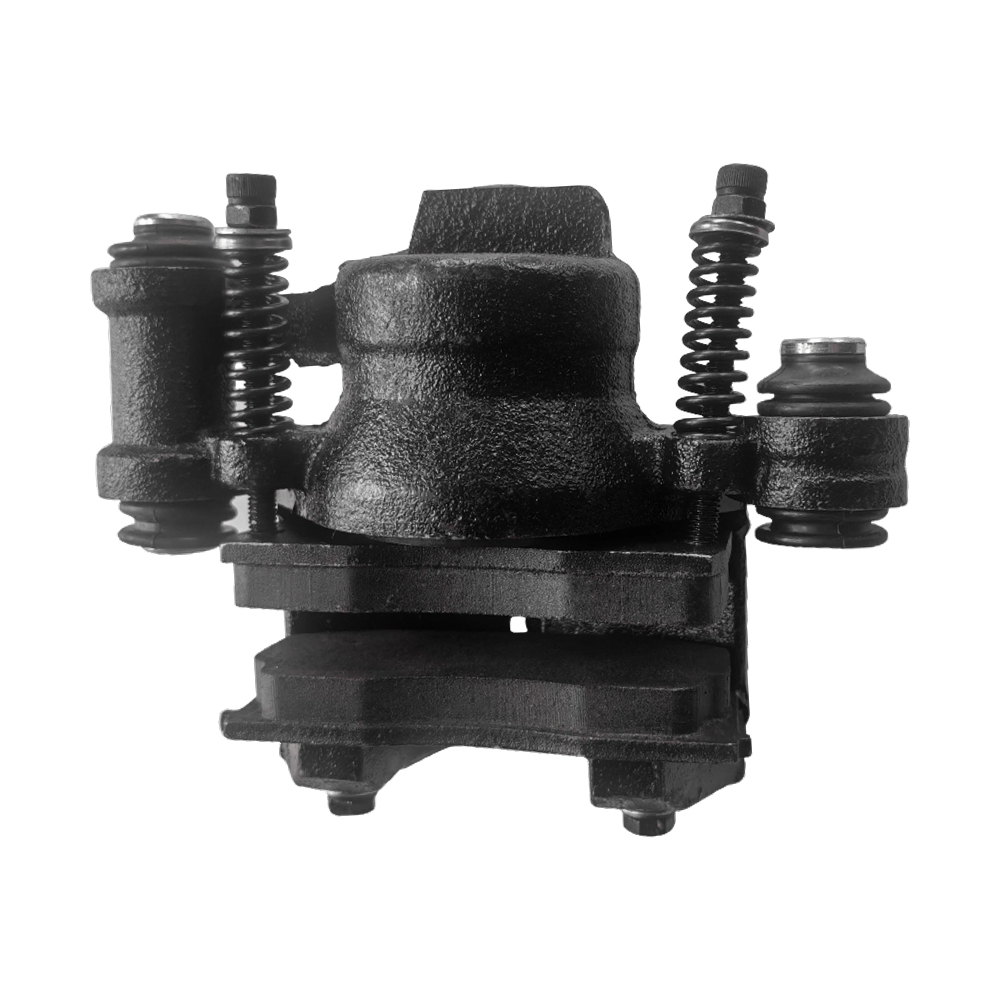
2. The tensile strength of the brake caliper housing in a Specialized Brake for Corn and Wheat Harvesting Machinery is engineered to withstand over 600 MPa, preventing housing flex that would otherwise lead to uneven pad pressure.
3. Achieving a specific Ra surface finish (typically 0.8 to 1.6 micrometers) on the brake disc is mandatory to ensure optimal friction surface contact in agricultural brakes, allowing the pads to bed-in rapidly without glazing.
4. Testing the HRC hardness of harvester brake discs ensures that the component can resist the abrasive wear caused by soil particles and crop residue, extending the maintenance interval during the peak harvest season.
1. How to calculate static holding torque for harvesting machinery: This involves the product of the effective brake radius, the clamping force of the pistons, and the friction coefficient; for a 15% grade, the Specialized Brake for Corn and Wheat Harvesting Machinery must often generate upwards of 15,000 Nm.
2. Comparing drum vs disc brakes for grain harvesters reveals that while drum brakes offer higher initial torque, disc-based Specialized Brake for Corn and Wheat Harvesting Machinery systems provide superior heat dissipation and self-cleaning properties.
3. Optimizing hydraulic pressure for harvester parking brakes requires the use of a pressure-reducing valve to prevent over-clamping, which could exceed the tensile strength of the brake mounting bolts.
4. Braking System Performance Specification Matrix:
| Engineering Parameter | Standard Industrial Brake | Specialized Brake for Corn and Wheat Harvesting Machinery |
| Static Holding Torque | Moderate | High (Grade 15% Compensated) |
| Contamination Rating | IP54 | IP67 (Dust & Organic Sealed) |
| Working Temperature | Up to 150 degrees Celsius | Up to 350 degrees Celsius (Sintered) |
| Surface Hardness | 180 - 220 HB | 240 - 280 HB (Heat Treated) |
1. Analyzing the thermal fatigue of harvester brakes: In "stop-and-go" harvesting cycles, the Specialized Brake for Corn and Wheat Harvesting Machinery undergoes rapid thermal expansion; high-carbon alloy discs are used to prevent cracking under these conditions.
2. Does ambient moisture affect harvesting brake performance? Specialized non-hygroscopic friction linings are used to ensure that morning dew or high humidity does not cause the "morning sickness" effect, where the first few braking applications are grabby or inconsistent.
3. Measuring the response time of emergency brakes in harvesters: To meet safety standards, the Specialized Brake for Corn and Wheat Harvesting Machinery must achieve full torque engagement within 200 milliseconds of operator or sensor input.
1. Can this brake handle a grain tank at 100% capacity on a slope?
Yes. The Specialized Brake for Corn and Wheat Harvesting Machinery is designed with a 1.5x safety factor specifically for fully loaded conditions on inclines up to 15 degrees.
2. What is the recommended Ra surface finish for replacement discs?
For optimal performance, the disc should be ground to an Ra surface finish of 1.2 micrometers. A finish that is too smooth can lead to vibration, while too rough will accelerate pad wear.
3. How often should the dust seals be inspected?
Given the impact of dust on harvester brake integrity, seals should be checked every 50 operating hours or daily during high-chaff wheat harvesting.
4. Why is HRC hardness important for the brake disc?
A hardness of 35-45 HRC ensures that the disc does not wear prematurely when exposed to the abrasive dust found in corn fields, maintaining the structural integrity of the Specialized Brake for Corn and Wheat Harvesting Machinery.
5. Is the static holding torque adjustable?
The torque is primarily governed by hydraulic pressure and spring rate. However, using high-friction coefficient (Mu > 0.45) pads can increase the effective holding power.
1. ISO 5676: Tractors and machinery for agriculture and forestry — Braking connection between towing and towed vehicles.
2. ASABE S365: Braking System Test Procedures and Braking Performance Criteria for Agricultural Field Equipment.
3. ASTM D2240: Standard Test Method for Rubber Property—Durometer Hardness (applied to seal integrity).
Recommended Products

Contact Info.
+86-159 9623 5291
No. 5, Chuangye Road, Niandou Industrial Park, Ma'anshan City, Anhui Province, China
MOBILE QR CODE

 English
  Español